
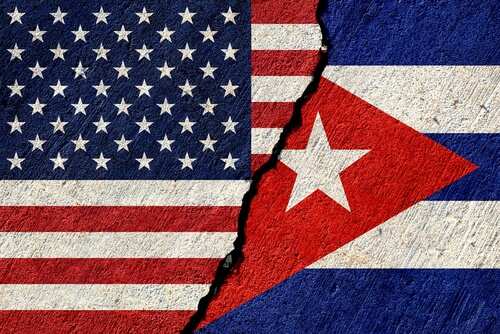
President Trump’s “friendly takeover” line on Cuba is a warning shot that America may soon confront a collapsing communist neighbor—right after forcing Iran back onto the defensive.
Story Snapshot
- President Trump said it is a “question of time” before the U.S. turns attention from Iran to Cuba, calling the island a “failed state.”
- Trump tied Cuba’s vulnerability to severe shortages, describing a country with “no money,” “no oil,” and “no food,” and pointed to high-level talks led by Secretary of State Marco Rubio.
- The Cuba comments arrived as U.S.-Iran negotiations sputtered and the administration demanded major limits on enrichment, missiles, and regional proxy activity.
- White House messaging has praised “decisive action” against Iran and promoted “Operation Epic Fury,” while no detailed Cuba plan has been publicly released.
Trump Links Iran Pressure to a New Cuba Focus
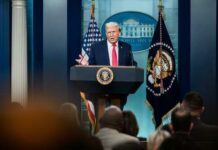
President Donald Trump spoke to reporters in Washington on February 27, 2026, and dismissed the direction of nuclear negotiations with Iran while listing U.S. demands that go beyond the nuclear file. Trump said Iran must halt uranium enrichment and also accept constraints on ballistic missiles and regional proxies. In the same appearance, Trump signaled Cuba could be next, describing it as a “failed state” and floating the idea of a “friendly takeover.”
Trump’s comments landed amid heightened U.S. military activity and ongoing messaging from the administration that it is pairing diplomacy with force. Public accounts of the Geneva talks showed Iranian officials claiming progress while the U.S. side emphasized broader security requirements. That gap matters because it explains why negotiations can stall: each side is talking about a different finish line. The administration has not released a formal Cuba strategy document alongside the remarks.
What “Friendly Takeover” Could Mean—and What We Don’t Know
The phrase “friendly takeover” is politically provocative, but the publicly available details remain thin. Trump said the United States is “talking to Cuba,” and he emphasized the talks are happening “at a very high level” through Secretary of State Marco Rubio. Beyond that, there is no official description of what the U.S. is offering or demanding—whether it is humanitarian relief, energy support, sanctions changes, political concessions, or a broader transition framework.
That uncertainty cuts both ways for Americans who value constitutional limits and clear policy aims. A hard-edged slogan can conceal a wide range of actions—from simple diplomacy to heavy economic pressure. The sources available do not show a specific request to Congress, a treaty text, or a defined authorization tied to Cuba. Until those details exist, supporters and critics alike are left interpreting a headline phrase rather than evaluating a concrete plan.
Cuba’s Economic Collapse Is the Leverage Point
The administration’s framing highlights Cuba’s internal weakness rather than an immediate military confrontation. Trump and related reporting pointed to severe shortages and a deepening crisis tied to lost external support, including disruptions connected to Venezuelan and Mexican energy flows. That context fits a traditional pressure strategy: when a regime cannot provide basics like fuel and food, outside leverage increases. At the same time, Cuba’s suffering population becomes the first to feel any additional strain.
Historically, U.S.-Cuba relations have swung between confrontation and limited thaw since the Castro revolution. The modern chapter includes the long-standing embargo, the Obama-era normalization attempt, and reversals during Trump’s first term. The current moment is being framed by some officials and analysts as a chance to push for change, especially if the island’s economic model is failing without reliable oil and external subsidies. The record provided stops short of confirming any agreed pathway.
Rubio, Bolton, and the “Troika” Mindset Returns
Secretary of State Marco Rubio’s role is central because he is both the lead diplomat in the reported talks and a long-time critic of the Cuban regime. Rubio has publicly argued that the “status quo is unacceptable” and that Cuba “needs to change,” language consistent with a tougher posture. Former National Security Adviser John Bolton has also argued that after pressure on Venezuela, Cuba could be next, reflecting a revived “Troika of Tyranny” lens from Trump’s first term.
Those views matter for policy direction, but they do not substitute for official commitments. Bolton’s commentary is influential yet not binding, and Rubio’s statements signal intent without detailing mechanisms. For a conservative audience wary of open-ended foreign entanglements, the key question is whether any Cuba initiative stays disciplined—defined objectives, legal authority, and measurable outcomes—rather than drifting into permanent mission creep. The sources provided do not answer that question yet.
Iran Operations, White House Messaging, and Risks of Overstretch
The Cuba remarks also arrived while the White House praised “decisive action” against Iran and highlighted “Operation Epic Fury” as an ongoing effort intended to make the world “safer” when complete. That sequencing suggests the administration views Iran as the primary theater and Cuba as a near-term follow-on. Reporting also indicated Trump was weighing options and consulting advisers on next steps, with decisions described as pending on a short timeline.
🚨🇺🇸 JUST IN: Trump says ‘question of time’ before US turns to Cuba after Iran.
— Technosaggy (@techsaggy) March 6, 2026
From a limited-government perspective, the prudent test is transparency: clear objectives, clear authorities, and clear endpoints—especially when the U.S. is already engaged in a serious Middle East escalation cycle. The provided research shows strong rhetoric and active operations on Iran, and it shows high-level talks and blunt assessments on Cuba. What it does not show is the detailed policy architecture that would let the public judge costs, risks, and constitutional guardrails.
Sources:
MAGA Senator Lindsey Graham Says President Donald Trump Will Target Cuba Next
Thank you President Trump for decisive action against the Iranian regime 🇺🇸
When Operation Epic Fury is complete, the world will be a safer place