

When top minds tied to America’s most sensitive energy and space research start dying or vanishing, taxpayers deserve more than silence and smug “conspiracy theory” labels.
Quick Take
- Joe Rogan highlighted a cluster of deaths and disappearances involving scientists and officials connected to advanced energy, nuclear, and space work.
- Several cases remain unresolved, and key claims about a broader “pattern” are still unquantified in public records.
- Rogan argued the motive is economic—breakthrough energy could upend trillion-dollar industries—while his guest tied it to wider UAP and AI fears.
- The lack of clear, public explanations from institutions fuels distrust and increases pressure for congressional scrutiny.
A cluster of cases forces uncomfortable questions
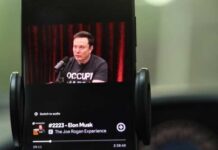
Joe Rogan’s April 9, 2026 discussion focused on a tight run of incidents involving people linked—directly or indirectly—to high-end research and national security-adjacent work. The cases cited include astrophysicist Carl Grillmair, shot on his front porch in February 2026, and retired Air Force Gen. William Neil McCasland, reported missing after leaving his Albuquerque home on February 27, 2026. Rogan also referenced NASA JPL scientist Frank Maiwald’s 2024 death and 2025 disappearances in the West.
Those names carry emotional weight because they point toward institutions Americans already fund and trust: NASA-linked work, national lab ecosystems, and military space programs. However, the public record presented in the research does not include a comprehensive list proving Rogan’s “numbers very high” claim, nor does it provide official findings that tie the incidents together. What is clear is simpler and still alarming: multiple individuals connected to advanced technical fields are dead or missing, and the public does not have satisfying answers.
Economic motive vs. “conspiracy” framing
Rogan’s core argument was not that aliens or magic are behind the cases, but that money and power create obvious incentives. He suggested disruptive energy breakthroughs—often discussed online under labels like zero-point energy or advanced plasma concepts—could threaten entrenched interests with trillions at stake. That framing appeals to common sense: large systems protect themselves. Still, the research material does not provide verified evidence of an “energy cartel” targeting scientists, and no official statements in the provided sources confirm suppression or coordinated foul play.
Duncan Trussell pushed the conversation in a more speculative direction, linking missing scientists to a broader “apocalyptic convergence” that includes UAP disclosures, AI acceleration, and global conflict. That mix can be gripping, but it also risks muddying what should be a disciplined demand for facts. Conservatives who watched federal agencies dodge accountability for years will recognize the pattern: when government communication is vague, the rumor mill fills the vacuum. The constitutional fix is not panic—it is oversight, transparency, and a clear standard for evidence.
What’s verified—and what remains uncertain
The research acknowledges limitations that matter. It states that mainstream outlets have not confirmed Rogan’s implication of unusually “high numbers,” and motives remain speculative: accidents, ordinary crime, foreign targeting, or something else. It also notes that searches connected to at least some disappearances were exhaustive yet produced no resolution. McCasland’s wife reportedly denied any special extraterrestrial link, undercutting the idea that his disappearance automatically connects to UAP secrets. These uncertainties do not debunk concern, but they do restrict what can responsibly be claimed.
Foreign targeting concerns and the national security angle
Separate from Rogan’s economic theory, the research references national security concerns that foreign adversaries may target U.S. talent in places like NASA-adjacent programs and national labs. That is a more conventional threat model and one Congress can address without drifting into sci-fi. If the federal government has credible threat intelligence, Americans should not be expected to accept “no comment” as the final word—especially when taxpayer-funded research and personnel safety are involved. Transparency can be structured, but it cannot be nonexistent.
Why this lands with conservatives in 2026
Trump’s second-term government now owns the burden of federal performance, and the public expectation is straightforward: protect Americans, defend strategic research, and speak plainly. Years of bureaucratic evasiveness—on everything from border enforcement to politicized agency behavior—trained voters to distrust opaque institutions. The unanswered questions in these cases land in that same distrust bucket. If Congress is probing, it should focus on facts: case status, interagency coordination, any evidence of foreign involvement, and what safeguards exist for scientists working on sensitive projects.
Watch: Rogan Encapsulates Why Missing Scientists Are No Conspiracy Theory… https://t.co/0E0Mhi7kXw
— zerohedge (@zerohedge) April 11, 2026
For now, the responsible bottom line is twofold. First, several of the cited incidents appear real and unresolved based on the research provided, and that alone warrants public accountability. Second, the leap from “unresolved” to a proven coordinated campaign has not been substantiated with hard evidence in the available sources. Conservatives do not need a conspiracy to demand answers; a functioning republic requires oversight, especially when elite research, national security, and unexplained disappearances intersect.
Sources:
Watch: Rogan Encapsulates Why Missing Scientists Are No Conspiracy Theory
Graham Hancock, Joe Rogan, and Archaeology
Joe Rogan’s UFO Playlist: Unpacking the Mysteries