
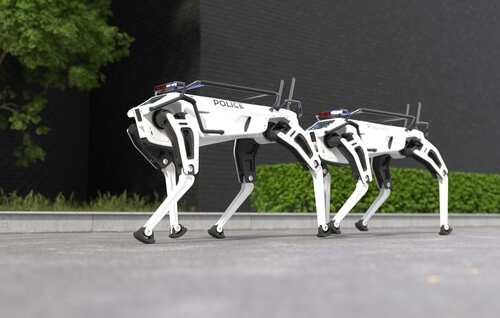
As billions struggle to afford food, a major agribusiness is deploying military-style robot dogs to guard corn fields from theft and trespass.
Story Snapshot
- Bayer is using autonomous “DroneDog” robotic security units to supplement human patrols on an 8,000-acre corn operation in Hawai’i.
- The systems use thermal and electro-optical cameras, zoom lenses, AI-driven detection, and live video feeds routed to security operations centers.
- Supporters call it smarter, lower-fuel security; critics see a stark symbol of a world where food gets scarcer while surveillance gets cheaper.
- Food-security experts warn fertilizer and fuel costs are creating a global “systematic shock” that threatens prices and supply stability.
Robot Dogs Move From Border-Tech to Farm Patrols
Bayer has begun supplementing traditional security on its Hawai’i corn operations with autonomous robotic dogs supplied by Asylon Robotics. Reporting describes the site as an 8,000-acre farm, with the company using the machines to help cover long perimeters and overnight hours when human patrols are harder to sustain. The technology marks another step in a trend: security robotics once associated with sensitive infrastructure and border-related deployments is now being adapted for private, high-value agriculture.
The robotic units, commonly described as “DroneDog,” carry thermal cameras and electro-optical sensors commonly associated with drone technology, along with high-powered zoom capabilities. They stream live video back to security operations centers and use AI-driven detection to flag irregular activity, including trespassers, wildlife, or suspected vandalism. In practical terms, that makes the system less of a gimmick and more of a mobile surveillance platform—one that can be dispatched across thousands of acres without putting a human guard in a vehicle for every shift.
What Bayer Says the Machines Actually Do
Accounts of the deployment emphasize the operational problems large farms face: crop theft, vandalism, wildlife damage, and the sheer cost of covering acreage every night with trucks and personnel. The robot dogs are presented as a supplement rather than a total replacement, helping security teams maintain a persistent presence without constant vehicle patrols. The same reporting highlights secondary benefits such as reduced fuel consumption, fewer emissions, and less soil disruption compared with repeated truck routes—advantages that matter to large operations watching expenses closely.
Even with those claimed efficiencies, key measurements are missing from the public record. The available reporting does not provide quantified before-and-after data on theft reduction, response times, or total cost of ownership versus traditional patrol models. It also does not specify precisely when Bayer began the rollout. For readers trying to separate marketing from measurable outcomes, that’s an important limitation: the capabilities are described in detail, but the results are not yet backed by publicly shared performance statistics.
Food Crisis Backdrop: High Costs, Tight Supplies, and Real-World Pressure
The robotic patrol story lands amid broader warnings about global food stress. Reporting cites an estimate that 2.3 billion people face moderate to severe food insecurity, while Food and Agriculture Organization economist Máximo Torero warns of a “systematic shock affecting agrifood systems globally.” The concern is not abstract: higher fertilizer prices and rising fuel costs hit irrigation, transport, and farm operations all at once, squeezing growers and raising the odds that shortages translate into higher grocery bills.
Another claim highlighted in the coverage connects fertilizer disruption to geopolitics, stating that conflict involving the Trump administration and Iran affected roughly one-third of the world’s global fertilizer supply. The reporting does not provide a detailed, itemized accounting in the same place it makes the claim, so readers should treat the exact proportion as a reported figure rather than a fully documented breakdown. What is clear is the broader point: fertilizer and energy volatility can ripple straight into food prices.
Why This Story Strikes a Nerve in 2026
For Americans already worn out by inflation and years of policy choices that drove up energy costs, the image is hard to miss: advanced surveillance robotics protecting “precious crops” while families watch grocery totals climb. The deployment itself is legal private security, but it underscores a deeper reality in modern policy debates—security and technology scale faster than affordability. When inputs like fertilizer and fuel spike, the biggest players can automate and harden facilities, while smaller farms may struggle to keep up.
GOD BLESS "MERICA"… Robot Dogs Patrolling Precious Crops as Food Crisis Deepens… https://t.co/PYZ5jtHqgj pic.twitter.com/v3cH6pGXDp
— Brian Harrod (@GetTheDailyDirt) April 18, 2026
None of the provided reporting suggests these robot dogs are government-run or aimed at ordinary citizens, and that distinction matters for Americans protective of constitutional limits. Still, the same surveillance tools pioneered for sensitive sites and border-adjacent missions are spreading into everyday commercial life. In a period when voters are demanding lower costs, secure supply chains, and less bureaucratic failure, the public will likely judge these deployments by one simple standard: whether they help stabilize food production without inviting new layers of centralized control.
Sources:
Robotic security dogs patrolling farms 24/7
Robotic security dogs now on the job to protect crops