

America’s astronauts have boldly returned from the Moon, proving U.S. ingenuity still leads the world against foreign rivals like China.
Story Highlights
- Artemis II launched April 1, 2026, first crewed U.S. lunar mission since 1972, sending four astronauts around the Moon on a flawless 10-day journey.
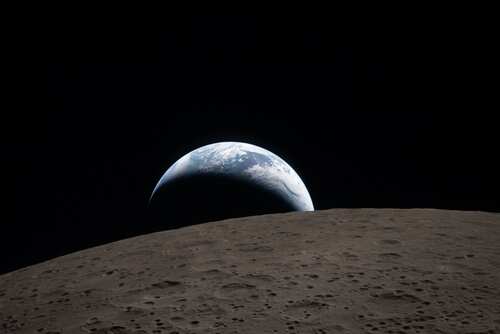
- Crew captured unprecedented far-side Moon images, solar eclipse views, and Earthrise, delivering vital science data for future missions.
- Christina Koch became first woman beyond low-Earth orbit; mission validates Orion spacecraft under Trump’s pro-America space push.
- Safe splashdown April 10 off San Diego reaffirms NASA leadership, boosting jobs and economy amid global competition.
Mission Launch and Crew Achievements
On April 1, 2026, NASA’s Space Launch System rocket lifted off from Kennedy Space Center’s Launch Complex 39B, carrying the Orion spacecraft “Integrity” with four astronauts: Commander Reid Wiseman, Pilot Victor Glover, Mission Specialist Christina Koch, and CSA’s Jeremy Hansen. This marked America’s first crewed deep-space flight since Apollo 17 in 1972. The crew quickly achieved key milestones, with Koch capturing Earth receding views on April 2, becoming the first woman to venture beyond low-Earth orbit on a lunar trajectory. These feats showcase disciplined execution and human endurance in extreme conditions.
Lunar Flyby Delivers Historic Imagery
The crew executed a seven-hour lunar flyby on April 6, passing 695,000 miles total. They photographed the Moon’s far side, terminator shadows, craters, and a rare solar eclipse revealing the Sun’s corona, Saturn, and Mars from 1.1 million kilometers away. Additional captures included Earthset, Earthrise, meteoroid impacts, and crew activities. NASA released thousands of high-resolution images starting April 7, revealing unseen lunar regions for geology studies. Victor Glover noted craters “fall straight to center of Moon,” aiding scientific analysis of terrain evolution.
Splashdown and Post-Mission Success
Orion splashed down off San Diego at 8:07 p.m. EDT on April 10, recovered by USS John P. Murtha. All systems performed perfectly, with the crew in excellent health after reentry. NASA confirmed Orion “in great shape,” validating life support, navigation, and abort systems for humans in deep space. Initial assessments show no major issues, positioning Artemis III lunar landing for 2027. This success counters years of delays from past mismanagement, restoring momentum under focused leadership.
Dr. Nicky Fox praised images as “exquisite” inspiring generations, while Jacob Bleacher highlighted how high-res views matched crew reports, boosting geologic insights. Minor initial image mismatches resolved quickly, with no factual disputes across sources.
Artemis II Mission Milestones: An Image and Video Recap https://t.co/9BDN4t7sOh #Artemis #Artemis2 #ChristinaHKoch #GReidWiseman
— Vibewire Central (@VibewireCentral) April 22, 2026
Strategic Wins for American Leadership
The $4 billion investment sustains tens of thousands of NASA jobs and advances partners like Boeing and Lockheed Martin. Politically, Artemis II reaffirms U.S. dominance versus China’s 2024 far-side sample return, securing strategic high ground for Gateway station and Mars missions. International partners like CSA gain prestige but NASA leads, ensuring American priorities drive exploration. Public inspiration from visuals strengthens support for space as national strength, not globalist waste.
Sources:
10 Iconic Photos That Define the Artemis II Mission
NASA’s Artemis II Crew Beams Official Moon Flyby Photos to Earth