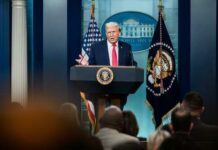

President Trump’s recent remarks suggesting the United States “may stop by Cuba” after operations in Iran have sparked alarm as anonymous sources claim the Pentagon is intensifying contingency planning for potential military action against the communist island nation just 90 miles from American shores.
Story Snapshot
- Trump publicly stated the US might “stop by Cuba” post-Iran operations, calling the island nation “terribly run” and a “failing” state
- USA TODAY reports Pentagon planning for possible Cuba operations intensified based on two sources, though Pentagon officials deny knowledge of specific strike plans
- Cuba designated 2026 as a “defense preparation year,” conducting nationwide military drills including artillery and tank exercises
- Congressional Democrats introduced resolutions requiring legislative approval before any military intervention, reasserting war powers oversight
- Secretary of State Marco Rubio, drawing on his Cuban immigrant heritage, publicly advocates for regime change while Cuban President Díaz-Canel vows resistance “even if it means dying”
Trump’s Provocative Rhetoric Escalates Regional Tensions
President Trump made headlines on April 14, 2026, when he publicly suggested the United States might intervene in Cuba following military operations in Iran. His characterization of Cuba as “terribly run” and a neighboring nation under his broad authority represents a significant escalation in rhetoric toward the communist regime. Unlike previous administrations that maintained diplomatic pressure through sanctions, Trump’s direct language signals a more assertive posture. The timing, immediately following references to Iran operations, suggests a sequential approach to foreign policy challenges that alarms constitutional conservatives concerned about executive overreach in military matters without proper congressional authorization.
Pentagon Planning Versus Official Denials Create Confusion
USA TODAY reported on April 15 that Pentagon planning for potential Cuba operations has intensified, citing two unnamed sources familiar with the matter. However, this conflicts sharply with testimony from Joseph Humire, Acting Assistant Secretary of Defense for Homeland Defense and Americas, who told Congress on April 16 he had no knowledge of specific strike plans. This discrepancy raises questions about whether legitimate contingency planning—standard military practice—is being mischaracterized as active preparation for invasion. The lack of transparency undermines congressional oversight, a core constitutional concern for conservatives who recognize the Founders’ wisdom in requiring legislative approval for war.
Cuba Responds With Military Mobilization and Defiance
Cuban President Miguel Díaz-Canel rejected any preconditions for dialogue while simultaneously ordering nationwide defense preparations throughout 2026. Military drills now include artillery exercises and tank maneuvers at Isla de la Juventud, demonstrating Havana’s commitment to deterrence. Díaz-Canel’s vow to defend sovereignty “even if it means dying” echoes Cold War-era resistance rhetoric. Cuba’s designation as the “strongest intelligence adversary” in the Western Hemisphere by US defense officials stems from its penetration of Latin American governments and alignment with Venezuela following disputed claims about Maduro personnel. These security ties justify legitimate American concern about regional stability and communist influence near US borders.
Congressional Pushback Highlights Constitutional War Powers Debate
House and Senate Democrats immediately introduced resolutions requiring congressional authorization before any military action against Cuba, with votes potentially scheduled by month’s end. This bipartisan concern about executive war powers reflects lessons from past conflicts where administrations bypassed legislative approval. For conservatives who prioritize constitutional limitations on government power, this debate represents a fundamental question about checks and balances. Secretary Rubio’s advocacy for regime change, informed by his family’s experience fleeing Castro’s regime, adds legitimacy to concerns about Cuba’s failed communist system. However, intervention without proper authorization would set dangerous precedent for future executive military discretion, undermining the constitutional framework patriots fought to preserve.
Is the Pentagon Preparing for Military Action in Cuba?https://t.co/TdBSs6XDSn
— PJ Media (@PJMedia_com) April 16, 2026
Historical parallels to the 1962 Operation Northwoods—declassified plans for false-flag provocations to justify Cuba invasion—remind Americans why transparency matters in military planning. The current uncertainty, with anonymous sources contradicting official Pentagon testimony, creates information gaps that prevent informed public debate. Short-term implications include heightened Caribbean tensions and potential refugee flows, while long-term risks involve renewed Cold War-style confrontations that divert resources from domestic priorities like border security and economic recovery from past inflationary policies. Any military action requires clear justification, congressional approval, and public support rooted in genuine threats to American security rather than political positioning.
Sources:
Pentagon Steps Up Planning for Possible Military Operations in Cuba
House hearing on US military and Cuba