
Americans are being bombarded with relentless pro-Israel messaging, sparking fierce debate over media honesty and the integrity of U.S. foreign policy.
Story Snapshot
- Tucker Carlson accuses both media and political elites of pushing a sophisticated pro-Israel propaganda campaign that distorts facts and misleads the public.
- Conservative circles are divided, with Carlson’s independent platform challenging the traditional right-wing consensus on unwavering U.S. support for Israel.
- Recent viral interviews and commentary have put bipartisan support for Israel under the microscope, amplifying calls for transparency and skepticism.
- Industry experts warn of growing polarization and urge critical media literacy amid accusations of propaganda and counter-propaganda.
Tucker Carlson Challenges Mainstream Pro-Israel Narratives
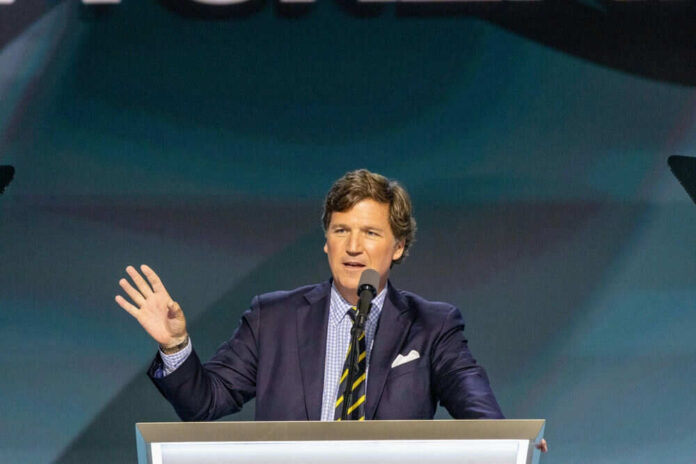
Tucker Carlson, a leading conservative commentator and former Fox News host, has reignited controversy by sharply criticizing the U.S. media and political establishment for their unwavering support of Israel. Since April 2025, Carlson has escalated his public condemnation, claiming that Americans are “marinated in lies” by an “incredibly sophisticated propaganda” effort orchestrated to shape public opinion and policy. He argues that this campaign manipulates perceptions, stifles dissent, and discourages objective debate on U.S.-Israel relations, a stance that marks a significant break from traditional conservative orthodoxy.
During a high-profile interview with Senator Ted Cruz on June 18, 2025, Carlson directly challenged the bipartisan consensus on supporting Israel, pressing for answers on why American interests are being subordinated to foreign priorities. He accuses Fox News and other influential outlets of “turning up the propaganda hose to full blast,” pushing pro-war narratives that echo Israeli government talking points. Carlson’s critique has found a receptive audience among conservatives increasingly skeptical of foreign entanglements, government overreach, and media bias—especially as Trump’s administration seeks to restore constitutional principles and prioritize American sovereignty.
Polarization and Power Shifts in Conservative Media
The fallout from Carlson’s remarks has exposed deep fractures within the conservative movement. While many mainstream commentators and organizations continue to defend strong U.S.-Israel ties, Carlson’s independent platform is amplifying dissenting voices and challenging longstanding alliances. His podcasts, newsletters, and viral social media clips feature guests critical of Israeli actions and U.S. policy alignment, sometimes presenting controversial claims without immediate challenge. These developments signal a growing willingness among segments of the right to question foreign policy orthodoxy and demand greater transparency from political leaders and media executives.
This shift is particularly notable given the historic context: for decades, American media and policymakers have largely supported Israel, often marginalizing dissent and framing criticism as outside acceptable discourse. Now, as conservative populism gains momentum and independent platforms grow in influence, the boundaries of debate are being tested. Carlson’s break with Fox News and other mainstream figures underscores a broader realignment, with grassroots conservatives increasingly rejecting narratives perceived as manipulative or detached from constitutional values and common sense.
Controversy, Critique, and the Call for Media Literacy
Carlson’s challenge to the media narrative has prompted strong reactions from across the political spectrum. Pro-Israel commentators denounce his approach, arguing that platforming conspiracy theories and inflammatory rhetoric risks fueling antisemitism and undermining legitimate analysis. Media experts contend that unchallenged claims can enable the spread of misinformation, cautioning viewers to be vigilant and critically assess sources. Meanwhile, anti-interventionist and pro-Palestinian advocates welcome the increased scrutiny of U.S. support for Israel but warn against substituting one form of propaganda for another.
Tucker Carlson: Americans ‘marinate in lies’ from Israel’s ‘incredibly sophisticated propaganda’ – LifeSite https://t.co/kFHOBOiaKq
— Just a MAGA Splorn farmer (@LarrysNana) October 10, 2025
Amid these tensions, scholars emphasize the importance of critical media literacy, urging Americans to examine both pro-Israel and anti-Israel narratives with skepticism and rigor. The debate highlights broader concerns about the role of lobbying groups, executive power, and media influence in shaping foreign policy. As the Trump administration continues to assert a “America First” agenda, the discussion over U.S. support for Israel serves as a litmus test for the movement’s commitment to transparency, constitutional values, and the protection of national interests against globalist pressures.
Sources:
Aish.com: Critique of Carlson’s platforming of anti-Israel claims
Mondoweiss: Analysis of Carlson’s criticism and its context
Times of India: Coverage of Carlson’s accusations against Fox News and U.S. media