

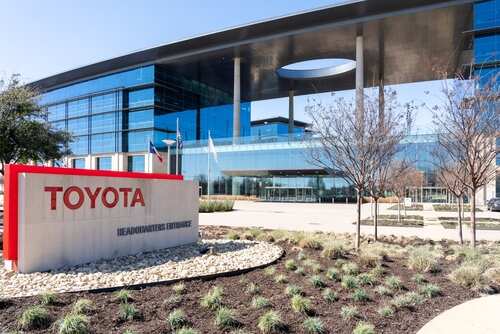
Corporate America is quietly voting with its feet, and California is losing its longtime Fortune 500 crown to lower‑tax red states like Texas as executives brace for even steeper billionaire tax schemes and regulatory overreach.
Story Snapshot
- Texas has surged to the top tier of states for Fortune 500 headquarters, powered by pro-growth policies and multiple high-profile relocations.[2][6]
- California’s heavy taxes and aggressive talk of new “billionaire taxes” are driving fears that more companies and jobs will flee.
- Texas now hosts dense corporate clusters in Houston and Dallas–Fort Worth, not just a few outlier firms.[1][3][5]
- Trump-era efforts to rein in federal overreach contrast sharply with blue-state policies that punish success and fuel corporate migration.
Texas Rises As A Fortune 500 Powerhouse While California Stumbles
Business data from Texas economic groups and local chambers paint a clear picture: the Lone Star State has become a magnet for America’s largest corporations, steadily overtaking once-dominant blue states that chose high taxes and heavy regulation. A Texas state promotional document reported as early as May 2022 that Texas was home to 53 Fortune 500 corporate headquarters, signaling a structural shift in where major companies feel welcome.[6] That total put Texas neck-and-neck with, and then ahead of, California in several tallies over the last few years.[2][6]
Subsequent regional counts show the trend has not reversed. The Dallas Regional Chamber reports that by 2024, the Dallas–Fort Worth region alone hosted 22 Fortune 500 headquarters and 48 among the Fortune 1000.[5] A separate Harris County report found that Texas had 52 Fortune 500 headquarters, with Harris County (greater Houston) holding nearly half of them.[3] These numbers vary slightly by year and method, but they tell the same story: large companies are increasingly basing their futures in Texas and other red states, not in high-tax coastal strongholds.[3][5][6]
Houston And Dallas–Fort Worth Show The Power Of Business-Friendly Clusters
Corporate leaders are not just chasing lower tax bills in the abstract; they are gravitating toward strong regional ecosystems that combine pro-growth state policy with workforce, infrastructure, and cost advantages. The Houston region now counts 26 Fortune 500 companies headquartered locally, ranking it third among United States metro areas.[1] That puts Houston in the same league as traditional power centers like Manhattan and Chicago, and it does so in a state with no personal income tax and a government that openly courts private investment.[1][3]
The Dallas–Fort Worth metroplex reinforces that this is not a one-city fluke. The Dallas Regional Chamber describes the area as a “magnet for corporate headquarters,” noting it has attracted 22 Fortune 500 headquarters and nearly 50 Fortune 1000 headquarters.[5] Household names like AT&T, Texas Instruments, American Airlines, Toyota, and McKesson now anchor operations there.[5] A separate list of companies in the Dallas–Fort Worth area underscores how many recognizable brands have either grown up in North Texas or chosen to relocate there from higher-cost states such as California.[6] Together, these clusters show that when government gets out of the way, private enterprise builds entire regions of prosperity.[3][5][6]
Corporate Migration Exposes The Cost Of Blue-State Tax Experiments
While promotion-minded Texas materials naturally highlight their own success, they inadvertently shine a spotlight on California’s policy failures. For years, Sacramento pursued ever-higher tax brackets, punitive regulatory schemes, and open talk of targeted “billionaire taxes” and wealth taxes that would reach far beyond the ultra-rich. Even Axios, hardly a conservative outlet, acknowledges that Texas now has over fifty Fortune 500 entries and is nipping at California’s heels in raw headquarters count, with Texas hosting 54 firms versus California’s 58 in one recent tally.[1] That narrowing gap reflects years of outbound movement from high-tax jurisdictions.[1][2][6]
The underlying research does not claim that tax policy alone explains every relocation, but tax and regulatory burdens clearly sit near the top of corporate concerns. When companies like McKesson, Charles Schwab, Oracle, and Tesla move leadership and legal headquarters from California to Texas, they consistently cite a “better business climate,” lower costs, and room to expand.[5][6] Those phrases bundle lower income taxes, friendlier regulators, and a cultural environment where success is not treated as something to be punished. In Trump’s second term, the federal government is at least no longer adding Washington-driven hostility on top of what companies already face in progressive states.
What This Trend Means For Workers, Families, And The Constitution
For everyday Americans, the shift in Fortune 500 headquarters is not just an abstract scoreboard between Texas and California; it is a proxy for where jobs, investment, and long-term opportunity will land. Texas leaders and local governments have chosen to emphasize property rights, energy production, and light-touch regulation, creating conditions where firms can invest with confidence.[3][6] By contrast, California has doubled down on climate mandates, union favoritism, and experimental tax schemes that ultimately land on workers through higher prices and fewer opportunities.
Samsung’s decision to relocate its U.S. corporate headquarters in Englewood Cliffs to Texas by the end of the year underscores New Jersey’s difficult tax and regulatory climate and serves as a clarion call for lawmakers and policymakers to change anti-business policies.
NJBIA…— twelvetwentyseven (@twelve_twenty7) June 3, 2026
Conservatives watching this trend should also see the constitutional stakes. When blue states chase short-term revenue through targeted taxes on capital and wealth, they invite legal battles over equal protection, interstate commerce, and basic fairness under the tax code. Red states that respect economic liberty are becoming safe havens for both entrepreneurs and employees who want to keep more of what they earn and live under laws that do not treat success as a sin. The corporate maps now mirror the political maps, and unless progressive states reverse course, they will keep exporting jobs, tax base, and talent to freer ground.
Sources:
[1] Web – California loses its Fortune 500 crown to a red state as billionaire …
[2] Web – Fortune 500 Companies | Houston.org
[3] Web – Texas is No. 1 in Number of Fortune 500 Companies
[5] Web – [PDF] TXFortune500.png (1276×1651)
[6] Web – Companies – Dallas Economic Development