

Iran proved it can shut down one of the world’s most critical oil routes — and U.S. intelligence now says Tehran can do it again whenever it wants.
Story Snapshot
- Iran effectively closed the Strait of Hormuz after U.S. and Israeli strikes on February 28, 2026, sending oil prices up nearly 70% this year.
- U.S. Central Command says it has degraded Iran’s ability to attack ships, but traffic through the strait remains far below normal.
- U.S. intelligence agencies now assess that Iran can shut down the strait at will, giving Tehran a powerful new weapon against the global economy.
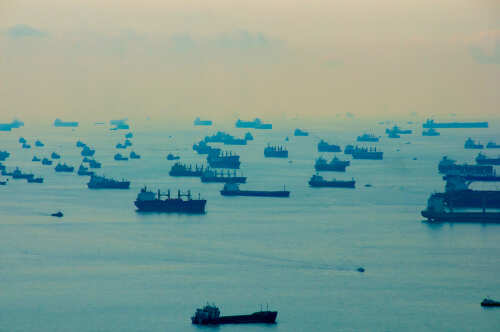
- About 2,000 ships remain stuck in the Gulf, and the U.S. says mine-clearing operations could take up to six months to complete.
The World’s Most Important Oil Chokepoint
The Strait of Hormuz sits between Iran and Oman. It connects the Persian Gulf to the Arabian Sea. About 20% of the world’s oil and liquefied natural gas moves through this narrow passage every year. The U.S. Energy Information Administration notes that very few alternate routes exist if the strait closes. About 3,000 ships used to pass through each month — until this year’s conflict changed everything.
After the United States and Israel launched strikes on Iranian nuclear sites on February 28, 2026, Iran’s Islamic Revolutionary Guard Corps declared the strait closed and threatened to fire on any ship that tried to pass. Iran also deployed sea mines across the shipping lanes. Tracking data showed tanker traffic dropped by 70% almost immediately. Brent crude oil prices surged to around $119 per barrel. Qatar declared force majeure on liquefied natural gas shipments.
Iran’s Tactics and Selective Control
Iran did not simply block all ships equally. The Islamic Revolutionary Guard Corps used speedboats, missiles, drones, satellite jamming, and mines to control who could pass. Iran charged tolls of over $1 million per ship for vessels it deemed friendly — mainly from India, Pakistan, Turkey, and China. Ships linked to the U.S., Israel, or Western allies were turned away or threatened. At least 21 ships were struck or targeted between March 1 and March 18 alone.
Iran’s government claimed a legal right to do this. In a March 2026 statement, Iran’s Ministry of Foreign Affairs said it was applying what it calls the “innocent passage” framework, arguing it can block any vessel it views as a security threat. The U.S. rejects that legal argument, but analysts note Iran has some room to contest international shipping rules because it never ratified the 1982 United Nations Convention on the Law of the Sea.
America Fights Back — But the Threat Remains
U.S. Central Command has not stood still. Admiral Brad Cooper announced that U.S. forces bombed an underground weapons facility on Iran’s coastline that stored anti-ship cruise missiles and mobile missile launchers. Defense Secretary Pete Hegseth said the U.S. blockade against Iran is “impenetrable” and claimed 125 million barrels of oil had already left the Gulf. Central Command stated flatly: “Iran does not control the Strait of Hormuz.”
Iran created leverage by making the Strait itself a cost center for global capital. The blockade and sanctions regime were tolerable to Washington so long as the costs were borne mainly by Iran. Once the conflict threatened the circulation of oil, shipping, insurance, Gulf state…
— Tony Teso (@tonyteso) June 16, 2026
But the reality on the water tells a more complicated story. U.S. intelligence agencies now assess that Iran can shut down access to the strait at will, even after a ceasefire or deal is reached. Around 2,000 vessels remain stuck in the Gulf waiting to move. The Pentagon told Congress that clearing the mines Iran allegedly laid could take up to six months — and that work likely cannot begin until fighting stops. Insurance premiums for ships in the area have jumped from a fraction of a percent of a ship’s value to nearly 5%. Even Vice President JD Vance has acknowledged the goal is to get the strait open “in a toll-free way for the long term,” signaling the U.S. knows this fight is far from over. Iran has shown the world it holds a powerful new card — and it will not be easy to take away.
Sources:
[2] Web – Iran proved it can close the Strait of Hormuz, but the U.S. is … – …
[3] Web – Strait Of Hormuz: Why Iran Is Unlikely To Block Key Oil Shipping Route
[4] Web – Amid regional conflict, the Strait of Hormuz remains critical oil … …
[5] YouTube – Why closing the Strait of Hormuz could have devastating …
[6] Web – Does Iran Possess the Right to Close the Strait of Hormuz under …
[7] Web – Re-Opening the Strait of Hormuz Won’t Restore the Status Quo
[8] YouTube – Iran shuts down the Strait of Hormuz. What more could it do?
[9] Web – Closing Time: Assessing the Iranian Threat to the Strait of Hormuz
[10] Web – than two months after Iran effectively shut down the Strait of Hormuz …
[11] Web – US intelligence agencies have recently assessed that Iran can …
[12] Web – 2026 Strait of Hormuz crisis – Wikipedia
[13] YouTube – US degrades Iran’s strike capabilities in the Strait of Hormuz
[14] Web – Iran war: What is the Strait of Hormuz and why does it matter? – BBC
[15] Web – Strait of Hormuz | International Crisis Group
[16] Web – Continuing Crisis in Strait of Hormuz: Why Iran’s Hold is Illegal and …
[17] Web – Will Iran Shut Down The Strait Of Hormuz? : r/geopolitics – Reddit
[18] Web – Strait of Hormuz Closure Likely Temporary, Oil Price Impact Limited
[19] Web – Iran says Strait of Hormuz will not be reopened to US ships – Facebook
[20] Web – When will Strait of Hormuz be ‘safe’ for commercial shipping again?
[21] Web – The Narrow Strait of Hormuz and its Long Winding History
[22] Web – Everything you need to know about the Strait of Hormuz – WBUR
[23] Web – [PDF] Strait of Hormuz – Strauss Center
[24] Web – Tracking data shows vessel traffic through the Strait of Hormuz …
[25] Web – Iran’s closure of the Strait of Hormuz has brought global trade to and …
[26] Web – History of the Strait of Hormuz – Facebook