
Three of Ali Khamenei’s sons stepped into the spotlight at their father’s massive Tehran funeral, while the new supreme leader son stayed away under threat and heavy security.
Story Snapshot
- Three sons — Masoud, Meysam, and Mostafa — appeared and prayed beside Ali Khamenei’s coffin in Tehran.
- New Supreme Leader Mojtaba Khamenei did not attend, with reports citing Israeli threats and security fears.
- The regime used the weeklong funeral, drawing millions, as a show of strength against the United States and Israel.
- Iranian officials reportedly pressured ordinary Iranians to join the mourning, turning grief into state propaganda.
Three Sons Mourn Publicly As Mojtaba Stays Away
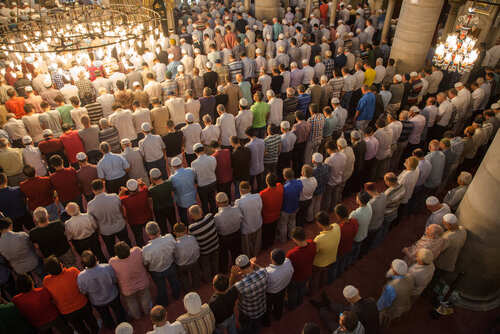
State and international outlets reported that three of Ali Khamenei’s sons — Masoud, Meysam, and Mostafa — joined mourners at funeral prayers in Tehran ahead of their father’s burial. Video from the prayer complex showed the brothers standing and praying beside the glass-covered coffin, weeping along with top regime figures and ordinary Iranians. Their rare public appearance highlighted how the Khamenei family remains central to the Islamic Republic’s power structure, even as war and sanctions batter Iran’s economy and isolate its regime.
While the three brothers grieved in public, Mojtaba Khamenei, now Iran’s Supreme Leader, was notably absent from the funeral ceremonies. Reports from the Associated Press and regional outlets linked his absence to specific Israeli threats to assassinate him if he appeared at the high-profile events. For American readers, that detail matters: it shows how Tehran’s leadership moves under direct pressure from Israeli and United States military power, even as the regime still talks about “resistance” and vows revenge against the West.
A Giant State Funeral Designed To Project Regime Power
The funeral for Ali Khamenei unfolded over several days across Iran and parts of Iraq, becoming one of the largest state-organized mourning events in modern history. Officials predicted that up to 20 million people could take part in ceremonies centered on Tehran’s Grand Mosalla and stretching to Qom, Najaf, Karbala, and finally Mashhad, Khamenei’s birthplace. Iranian media and officials openly framed the huge crowds as proof of support for the Islamic Republic, using the funeral as a propaganda stage to defy Western pressure and to signal ongoing commitment to its theocratic system.
The scale of the ceremonies also served Tehran’s foreign policy goals. Iran’s leaders invited representatives from more than 100 countries, including Russia, China, and several regional allies, turning the funeral into a form of “funeral diplomacy” meant to contrast with Western events and to show that the regime is not isolated globally. At the same time, Iranian outlets accused the United States of quietly warning foreign governments not to send high-level delegations, threatening “negative consequences” for ties with Washington if they publicly embraced Tehran during the war.
Forced Attendance And Grief As Protest Inside Iran
Behind the large crowds, reports from Persian-language media and social posts say Iranian authorities pressured government workers, businesses, and charities to attend funeral processions. People described being told to close shops and join marches or risk trouble with local officials, a pattern that fits long-standing regime tactics of turning state funerals into staged shows of unity. This picture contrasts sharply with American values of voluntary assembly and free speech, where real public mourning is not supposed to be managed from above by bureaucrats and security forces.
This is a header
At the same time, many Iranian families have used funerals in recent years to quietly challenge the regime, including dancing, playing joyful music, and honoring the dead as “eternal names” instead of silent victims. Human rights groups have documented cases where authorities even blocked families from holding normal mourning rites, fearing that funerals for protesters could turn into anti-government rallies. In that context, the Khamenei funeral sits inside a wider struggle over who controls grief in Iran: the state, which wants every tear to serve its message, or citizens, who increasingly use mourning as a way to resist and demand basic freedoms.
For American conservatives, this matters because it shows how authoritarian systems exploit public emotion to protect their ruling class. The Khamenei family, with four sons deeply tied into religious, security, and propaganda networks, stands at the top of that system. While Masoud, Meysam, and Mostafa can appear in public under state protection, Mojtaba’s hidden role — injured in airstrikes, guarded from view, and chosen by clerics rather than voters — highlights how little say ordinary Iranians have in who rules them or how their country confronts the United States.
This is a header
The United States–Israel airstrike campaign that killed Ali Khamenei and several relatives set the stage for this tense funeral. Reports noted that a son-in-law and daughter-in-law died in the strikes, adding personal loss for the ruling family on top of the wider war damage. Even as Iran’s armed forces fire missiles and drones toward Israel and United States bases, its leaders remain focused on preserving the dynasty-like hold of the Khamenei clan, using religion and state media to rally support around the fallen leader’s image.
#WestAsiaConflict LIVE | Khamenei's Other Sons Appear At His Funeral In #Iran As Mojtaba Remains In Hiding#USIsraelIran #Khamenei #KhameneiFuneral #IranWar #LatestNews https://t.co/ppoRsIZUqW
— ETV Bharat (@ETVBharatEng) July 6, 2026
For the Trump-era United States, the lesson is clear: the Tehran regime still operates as a tight, unelected family circle that turns every national crisis — even a funeral — into a tool for control and propaganda. Millions of Iranians may be marching, but many are pushed there, watched by security agents, and told what slogans to chant. Understanding how the Khamenei sons move, appear, or stay hidden helps Americans see the true nature of this adversary and why strong, constitutional leadership at home remains essential when dealing with regimes that fear free people and honest mourning.
Sources:
youtube.com, aljazeera.com, cnn.com, nbcnews.com, instagram.com, facebook.com, nypost.com, ynetnews.com, amp.dw.com, apnews.com, iranintl.com, newlinesmag.com, nytimes.com, iranhumanrights.org