

President Trump just put Iran on a two-to-three-week clock—and warned the next phase could target the power grid and even oil, raising major stakes for America’s security and the world’s energy supply.
Quick Take
- Trump said “Operation Epic Fury” has spent 32 days hammering Iran’s military and nuclear infrastructure while strikes continue.
- Trump set a 2–3 week window for diplomacy, warning a “final phase” could hit electric generating plants and possibly oil facilities.
- The White House message frames the campaign as preventing Iran from rebuilding a nuclear capability and regaining conventional leverage.
- Only one primary written source is available; most battlefield claims come directly from Trump’s primetime address and remain difficult to independently verify.
Trump’s primetime address frames a tightening endgame
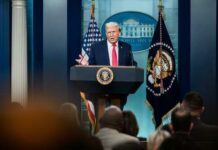
President Donald Trump used a primetime address on Wednesday night, March 31, to describe an ongoing U.S. military campaign against Iran that he said had been underway for 32 days. Trump labeled the operation “Operation Epic Fury” and described it as a systematic effort to destroy Iran’s ability to fight conventionally and to prevent nuclear rebuilding. Trump also said strikes were continuing “as we speak,” signaling the campaign is active, not concluded.
Trump’s description emphasized speed and scale, claiming Iranian naval and air capabilities had been “devastated” and that key leadership and command structures—especially those linked to the Islamic Revolutionary Guard Corps—had been decimated. He also said weapons factories, missile systems, drone networks, and nuclear sites were hit. The available reporting does not include independent confirmation or a detailed U.S. government battle damage assessment, so the public record largely mirrors the President’s account.
What the “final phase” could mean: power plants and oil
Trump’s most consequential warning centered on escalation options he said have not yet been used: strikes on electric generating plants and potentially oil facilities. He framed these targets as leverage to force an agreement within the next two to three weeks, and he used stark rhetoric about pushing Iran back into a “Stone Age” condition if it refuses. That phrasing underscores an infrastructure-focused threat, not just continued strikes on military sites.
The policy implications are blunt. Striking electricity generation can trigger cascading effects across water systems, hospitals, communications, and basic commerce. Threatening oil facilities carries separate consequences—both inside Iran and abroad—because it risks amplifying volatility in global energy markets even if the U.S. intends to avoid broader disruption. The sourcing available for this story does not provide operational details, rules of engagement, or specific target sets beyond Trump’s outline.
Diplomacy window, pressure tactics, and constitutional stakes
Trump paired his escalation warning with a defined negotiating window, arguing that U.S. power has left Iran with limited options. The reporting indicates talks are underway in parallel with strikes, but it does not identify negotiators, locations, or terms on the table. With only one major write-up available, the public is left with a familiar modern reality: high-impact national security decisions being communicated through a televised address while key specifics remain classified or undisclosed.
For constitutional-minded conservatives, the key question is how long-term military action is being authorized and overseen. The provided reporting does not outline congressional authorization, war powers notifications, or a formal legal rationale. That absence does not prove such steps were not taken; it simply means the available source material doesn’t document them. In a second Trump term, voters who demanded accountability from prior administrations will likely expect clarity on objectives, endpoints, and oversight.
Energy choke points and why Americans should watch the Strait of Hormuz
Trump also referenced the Strait of Hormuz, a critical corridor for global oil shipments, and indicated that other countries should not assume U.S. forces will guarantee access if the conflict widens. The reporting suggests this was part warning and part pressure tactic, aimed at shaping third-country behavior while talks proceed. Even without confirmed disruptions, the mere prospect of instability around Hormuz can move markets and influence fuel prices back home.
Americans who are already fed up with inflation and high energy costs will notice the tradeoffs immediately: decisive action against an adversary can also create short-term market fear. The limited available documentation does not quantify price impacts or provide updated projections. What is clear is that Trump presented a hard-edged strategy—military dominance plus a short diplomatic fuse—designed to end Iran’s nuclear ambitions rather than manage them indefinitely.
Sources:
‘Stone Age’ Warning Sets Clock As Trump Lays Out Final Phase on Iran