

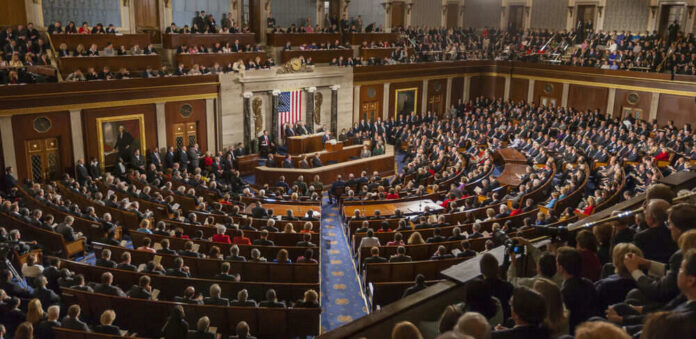
Vice President JD Vance is warning that Democrats are reshaping election rules and maps to tilt national power for years to come.
Story Snapshot
- JD Vance says Democrats are structuring elections to box out Republicans nationally.
- Democrats moved their 2028 primary calendar to favor states in their coalition.
- Vance links immigration policy and big-money spending to long-term power plays.
- Democrats defend D.C. statehood as representation, not a partisan lock-in.
Vance’s Core Claim: Structural Power Plays Are the Point
Vice President JD Vance told Republicans that Democrats are using structural tactics to lock in power. He argued they aim to make Republicans “never win another national election” by stacking the deck across rules, states, and demographics. He tied these moves to the rise of far-left candidates and policies he says crush workers and family budgets. Vance pressed this case in speeches and media hits that previewed 2028 stakes and warned about losing the House and Senate to the left.
Vance also drew a direct line between border policy and the ballot box. He said Democrats want to legalize large numbers of illegal entrants and then let them vote in American elections. He warned that doing so would upend future national contests. He framed this as a deliberate strategy to change who holds power, not a debate over compassion or process. His 2024 remarks captured the stakes he sees for the country’s political future.
Calendar Engineering: Democrats Reorder Early States
Democrats approved a 2028 calendar that moves racially diverse and union-heavy states to the front. South Carolina leads the primary window, followed by Nevada, with New Mexico, Michigan, Virginia, and New Hampshire in the early mix. Party leaders say the shift better matches their coalition and gives more voters a voice. Critics see a map that favors the left’s base and steers momentum toward their preferred candidates in the first contests.
This calendar fight fits a long pattern in both parties. National committees adjust dates and rules to gain leverage and shape media coverage. Early states often decide momentum, donors, and who survives the first rounds. Scholars note these steps can be framed as opening access or as tilting the field for advantage. The same change can look like reform to some and entrenchment to others. That tension is why calendar politics remain so fierce every cycle.
Money and Maps: Vance Says Blue Cash Targets Red States
Vance told voters that Democrats will pour millions into deep-red states to flip Senate and House seats. He cited Idaho as one example, warning that a flood of outside money can overwhelm local voices and shift outcomes in low-cost media markets. He urged Republicans to match funds and turnout to blunt the wave. He tied this spending to a broader plan to chip away at conservative strongholds and build a lasting national majority.
On the stump in Iowa, Vance said Democrats want to “utterly transform” the country and that everyday Americans are the obstacle. He pointed to kitchen-table stress from high costs and crime and claimed left-wing policies make both worse. He cast the midterms as a firewall for faith, family, work, and freedom. He argued that if Republicans lose, Democrats will control rules on voting, energy, speech, and borders for a long time to come.
D.C. and Puerto Rico: Representation or Permanent Edge?
Some Democrats have urged statehood for Washington, D.C., and Puerto Rico if they regain power. Advocates describe it as democracy and self-rule, not a partisan chess move. The District’s party platform calls statehood a core issue tied to ending federal overreach. Local leaders say it should rise above party labels and focus on fair representation. Republicans counter that the effect would likely be two new senators aligned with the left, changing the chamber for decades.
The factual record shows Democrats pitching statehood as a rights issue. House Democrats have defended D.C.’s self-determination and backed bills to make it a state. They say residents deserve a vote in Congress like every other American. That is the public rationale. The political impact is also real. Adding safe-blue seats would shift Senate math and national policy. Voters can judge whether the intent, effect, or both should drive this decision.
What It Means for 2026 and Beyond
Republicans face a layered fight: election rules, early-state calendars, money flows, immigration policy, and possible new states. Each piece may look routine alone. Together, they add up to a durable edge if left unchecked. Vance wants the right to treat structure as seriously as message and turnout. He argues that guarding borders, securing elections, and defending state balance are not “inside baseball.” They are how the nation chooses its path for the next generation.
Sources:
facebook.com, washingtontimes.com, idahostatejournal.com, foxnews.com, politico.com, yahoo.com, cnn.com, washingtonsun.com, politifact.com, english.aawsat.com, washingtonexaminer.com, news.ballotpedia.org, preprints.apsanet.org, ebsco.com, cadem.org, insight.goover.ai