

A new policy threatens Ukraine’s sovereignty, suggesting major concessions in exchange for peace.
Story Highlights
- Trump urges Ukraine to abandon NATO ambitions and accept Crimea’s annexation.
- U.S. proposes alternative security guarantees instead of NATO membership.
- High-stakes meeting at the White House with Zelenskyy and European leaders.
Trump’s Proposal for Peace
President Donald Trump has called on Ukrainian President Volodymyr Zelenskyy to drop Ukraine’s ambitions of NATO membership and accept the annexation of Crimea by Russia as a pathway to peace. This bold proposal was made publicly just before a high-profile meeting at the White House, which includes several key European leaders. Trump’s stance is seen as a significant shift in U.S. foreign policy, emphasizing negotiation over military confrontation.
This approach suggests offering Ukraine alternative security guarantees, a move that could reshape the geopolitical landscape in Eastern Europe. Trump’s proposal is grounded in a desire to reduce U.S. military commitments abroad while attempting to broker a peace deal that could define his presidency. However, the implications for Ukraine’s sovereignty and territorial integrity are profound, raising concerns among Western allies.
European and Russian Involvement
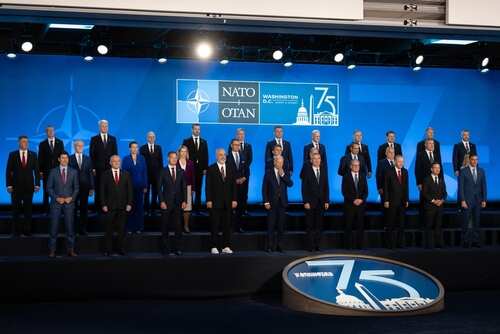
European leaders, including NATO Secretary General Mark Rutte and French President Emmanuel Macron, are involved in the White House discussions, highlighting the international stakes of this potential settlement. Russia, under President Vladimir Putin, has reportedly shown willingness to allow U.S. and European security guarantees for Ukraine, marking a notable shift in Moscow’s stance.
Putin’s acceptance of alternative guarantees instead of NATO membership for Ukraine could ease tensions. However, it raises questions about the durability and credibility of such assurances compared to the established NATO framework. The involvement of European leaders in these talks underlines the broader implications for regional stability and the future of NATO itself.
Implications and Reactions
The potential agreement’s short-term implications include a possible ceasefire or peace settlement, which could stabilize the region. However, it risks backlash within Ukraine, where many view these concessions as capitulation. Long-term, this settlement may redefine European security architecture and set a precedent where territorial concessions become a method for conflict resolution.
Critics argue that such concessions could embolden future acts of aggression by rewarding territorial conquest. Alternative security guarantees must be robust to prevent future instability. As negotiations continue, the world watches closely, aware that the outcome could have far-reaching effects on international norms and regional security.
Trump tells Zelenskyy to drop NATO dreams in pursuit of peace https://t.co/IX0G6j7NLy via @BIZPACReview
— Lester McClintock (@LesterMcCl28224) August 18, 2025
As the meeting unfolds, the geopolitical dynamics are at a critical juncture. The international community awaits the results, which could redefine alliances and reshape the global order. The balance between achieving peace and maintaining sovereignty remains delicate, with significant impacts on Ukraine, Russia, and the broader international community.