
Trump’s decision to let Nvidia sell advanced H200 AI chips to China has split his own supporters, raising hard questions about how to protect American security while keeping our tech edge and economy strong.
Story Snapshot
- Trump approved Nvidia H200 AI chip exports to “approved” buyers in China while keeping the newest Blackwell and Rubin chips off-limits.
- The policy aims to keep China about 18 months behind U.S. capabilities, using strict licenses and volume controls.
- National-security hawks warn this risks “arming a rival,” while industry argues it protects U.S. chip leadership and jobs.
- The move comes amid a broader Trump–Xi thaw on tariffs, rare earths, and trade leverage.
Trump’s H200 Decision: Calibrated Risk Or Dangerous Opening?
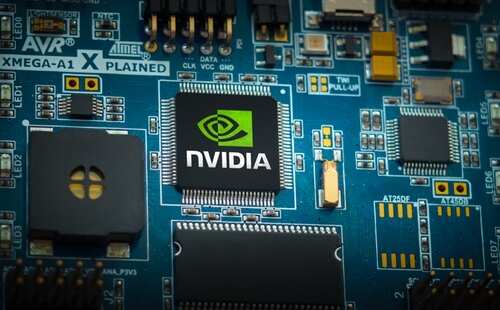
On December 8, 2025, President Trump announced that the United States will allow Nvidia to sell its H200 AI accelerator chips to approved customers in China, while still banning exports of the cutting‑edge Blackwell and upcoming Rubin lines. The White House frames this as a way to reopen a multi‑billion‑dollar market without giving Beijing true frontier capability. Licenses, volume limits, and a built‑in technological lag are supposed to keep America’s AI advantage intact.
Under the new approach, Chinese buyers are meant to remain roughly a generation—about 18 months—behind top U.S. systems. Trump’s team argues that tightly controlled sales of older‑generation chips, rather than a total ban, keep China dependent on American technology and subject to U.S. leverage. At the same time, Nvidia regains access to a critical source of revenue, strengthening a flagship U.S. firm whose hardware underpins much of the free world’s AI infrastructure.
From Biden’s Hard Ban To Trump’s “Generation Gap” Strategy
During the Biden years, Washington steadily tightened rules to choke off China’s access to high‑end Nvidia chips like the A100 and H100, then moved again when Nvidia tried to design weaker, China‑only versions such as the A800, H800, and H20. Those rules sought to deny Beijing top‑tier AI compute outright, but they also slashed U.S. companies’ sales and encouraged Chinese firms to pour resources into homegrown alternatives. That “messy middle” left many conservatives questioning Biden’s economic judgment.
Trump’s second administration first drew a hard line where it matters most: it blocked even a downgraded Blackwell variant from going to China and publicly vowed to keep the most advanced AI chips on American soil. Only after that bright red line was established did the White House move to reopen carefully controlled H200 exports. Supporters see a contrast with Biden’s approach: instead of endless rule tweaks that hurt U.S. business without fully stopping China, Trump is trying to combine an absolute ceiling with a managed, taxable floor.
Security Hawks Versus Economic Realists On “Arming A Rival”
National‑security hawks, including prominent conservative voices, argue any meaningful flow of H200 chips risks supercharging China’s military, cyber, and surveillance capabilities. They point out that AI compute is now as strategically sensitive as advanced missiles or stealth technology. From their perspective, allowing China to buy thousands of high‑end accelerators—even if not the newest ones—could help the Chinese Communist Party refine autonomous weapons, expand digital repression, and challenge U.S. forces in any future conflict.
More economically minded conservatives counter that a zero‑export stance looks clean on paper but breaks down in practice. Smuggling networks and gray‑market brokers have already helped Chinese firms obtain banned Blackwell‑generation chips. If Beijing can work around outright bans, then Washington risks sacrificing American jobs and research budgets for a control regime that leaks anyway. In that light, a controlled, licensed, and taxed channel for H200 sales may give the U.S. more visibility and leverage than pretending total denial is working.
The 25% U.S. Fee And The Global AI Market Chessboard
One of the most unusual features of Trump’s policy is a 25 percent fee the U.S. collects on Nvidia’s China sales. Supporters see that levy as turning a security burden into a strategic asset: Washington captures revenue that can support defense, enforcement, or further R&D, while Nvidia still benefits from reopening the Chinese market. For readers tired of watching Washington give away leverage, the idea of making Beijing help pay America’s bills has clear appeal.
Critics warn there is another risk: if Chinese cloud providers can buy enough H200s, they could start building cheaper AI data centers that undercut American companies abroad. With subsidized capital and less regulatory friction, Chinese platforms might offer bargain‑basement AI services across the developing world. The Trump White House answers that licensing and volume controls will be strict enough to prevent China from fielding truly global competition, while still letting U.S. firms scale and innovate from a position of strength.
U.S.–China Thaw: Smart Leverage Or Strategic Complacency?
Trump’s chip decision sits inside a broader, hard‑nosed détente with Beijing. After a high‑profile meeting in Busan, both sides eased some tariffs, and China temporarily lifted export restrictions on crucial materials like gallium, germanium, and rare earths needed for electronics and defense. Beijing also rolled back some retaliatory measures against U.S. companies and farm products, moves that directly benefit American workers and producers who suffered during years of one‑sided globalism.
The fierce debate behind Trump’s move on selling AI chips to China – $NVDA https://t.co/8ym14aQrPw
— JBT Capital™️ (@jbtcapital) December 11, 2025
For constitutional conservatives, the key question is whether this calibrated thaw strengthens or weakens America’s long‑term security. On the one hand, Trump has drawn clear red lines at the true frontier of AI, reasserted economic nationalism, and forced Beijing to pay a premium for staying a step behind U.S. technology. On the other, selling powerful chips to an authoritarian rival always carries risk. The coming years will test whether this bet preserves U.S. military superiority and economic vitality—or whether it lets a hostile regime close the gap.
Sources:
US-China Relations in the Trump 2.0: Implications
With chip exports, the US-China AI race will go global
Should the US Sell Hopper Chips to China?
Congressional Research Service: U.S. Export Controls and China