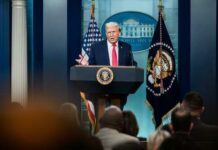


President Trump’s bold move to hike tariffs on India within 24 hours over its Russian oil purchases sends a fierce message that American interests and global accountability come first—no matter who objects.
Story Snapshot
- Trump announces substantial tariff increases on Indian exports in response to India’s continued Russian oil imports.
- Policy directly ties U.S. trade penalties to India’s foreign energy dealings, marking a sharp escalation in trade tensions.
- Indian government decries the action as unjustified, fueling a diplomatic standoff and uncertainty for exporters.
- Nearly half of India’s $85 billion in U.S. exports are now at risk, with potential ripple effects on consumers and global supply chains.
Trump Links Tariffs to India’s Russian Oil Purchases
On August 5, 2025, President Trump declared he will “very substantially” increase tariffs on Indian exports within 24 hours, citing India’s refusal to curb its purchases of Russian oil. This announcement was made as India became the world’s largest seaborne buyer of Russian crude, a move that Trump argues directly undermines international efforts to pressure Russia over its ongoing war in Ukraine. The Trump administration frames this escalation as both a necessary trade measure and a clear stance against adversaries fueling conflict through commerce.
This rapid, public approach signals a dramatic shift from the diplomatic warmth that characterized earlier U.S.-India relations. Trump’s use of tariffs as both a trade and foreign policy weapon demonstrates his commitment to American leverage, holding India accountable for what he describes as “fueling the war machine.” While prior administrations opted for behind-the-scenes negotiations, Trump has elevated the issue to a public showdown, warning of further penalties unless India reduces its Russian oil dealings.
Historical Context: Trade Tensions and Energy Security
The roots of this dispute run deep. U.S.-India trade relations have long been strained by disagreements over tariffs, market access, and intellectual property rights. Under Trump’s first term, the U.S. revoked India’s preferential trade benefits and imposed tariffs, citing market barriers and trade imbalances. India retaliated, but the stakes rose further after Russia’s invasion of Ukraine triggered Western sanctions. India, prioritizing affordable energy, increased its Russian oil imports, arguing that Western nations also continue business with Russia. Trump’s return to office in 2025 brought a more confrontational tone, linking punitive tariffs directly to India’s energy policies.
India’s energy strategy hinges on affordability and supply security, making Russian oil an attractive option despite Western pressure. The U.S. is India’s largest export market, with bilateral trade surpassing $170 billion in 2024. By leveraging tariffs, Trump is not only targeting economic ties but also sending a message about American resolve. Previous incidents—such as the U.S.-China trade war and the 2019 withdrawal of India’s GSP status—set the stage for today’s escalation, but the direct connection to Russia’s war marks a significant new development.
Diplomatic Fallout and Stakeholder Reactions
The Indian government has condemned Trump’s tariff threats as unjustified, launching consultations with business leaders and stakeholders to prepare a response. Indian exporters—especially in textiles, pharmaceuticals, and IT—now face immense uncertainty, with nearly half of their $85 billion in U.S. exports at risk. U.S. importers and consumers could also feel the impact through higher prices and potential supply chain disruptions. India’s Ministry of External Affairs criticized what it views as Western double standards, noting that Europe continues to trade with Russia. Meanwhile, the Kremlin has called the U.S. threat “illegal” and defended India’s right to pursue its own energy policy.
Industry experts caution that while tariffs are intended to pressure India, the move could backfire by driving India closer to Russia and China. Some analysts view Trump’s strategy as a negotiating tactic, hoping to extract concessions, while others see it as a genuine shift toward a more transactional, punitive trade relationship. Regardless, the immediate effect is heightened diplomatic tension and the potential weakening of the U.S.-India strategic partnership. The effectiveness of India’s response—and whether Trump will follow through on further tariff increases—remains to be seen.
President Donald Trump said he would raise tariffs on Indian goods “over the next 24 hours” in response to New Delhi’s continued purchases of Russian oil https://t.co/lUJFGMw8yQ
— Bloomberg (@business) August 5, 2025
Short-term consequences include disruptions for Indian exporters and higher costs for American consumers. Long-term, the standoff could trigger a realignment of India’s trade relationships, increased economic cooperation with Russia, and broader instability in global supply chains. For American workers and families, the episode reinforces the need for strong leadership that puts U.S. interests first and holds foreign governments accountable for actions that undermine American security and prosperity.
Sources:
Trump says he will raise India tariffs in next 24 hours over Russia oil
Donald Trump tariff on India: India’s purchase of Russia oil — how India plans to counter Trump
Trump higher tariff rates India Russia oil trade deal — Live Updates