
The European Union is taking the reins in supporting Ukraine as U.S. involvement under the Trump administration takes a back seat.
At a Glance
- The EU has adopted an 18th sanctions package against Russia, targeting energy imports and military logistics.
- The EU steps up military aid to Ukraine with increased air defense systems from Germany and the UK.
- Ukraine’s domestic arms production now supplies 40% of its military needs, aiming for 50% within six months.
- The U.S. under Trump has shifted to a less direct role, focusing on arms sales rather than donations.
EU Steps Up as U.S. Steps Back
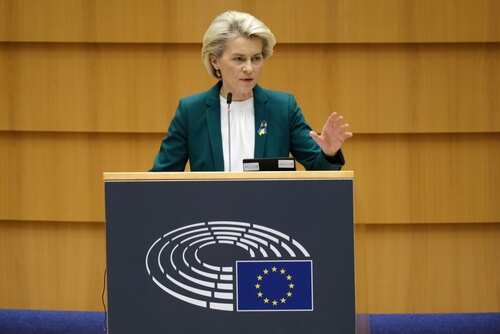
In a notable shift in global dynamics, the European Union has taken a leading role in supporting Ukraine, both economically and militarily. This change comes as the Trump administration in the United States scales back direct involvement, opting instead for arms sales and symbolic participation in allied meetings. The EU’s latest sanctions package is its 18th against Russia, aiming to cripple Russian energy revenues and military logistics by setting a dynamic oil price cap and banning all remaining Russian energy imports. This move signals the EU’s determination to assert strategic autonomy from U.S. security guarantees.
Germany and the UK have pledged to supply anti-aircraft missiles to Ukraine, while Germany collaborates with the U.S. to provide Patriot air defense systems. This military aid is a crucial part of the EU’s strategy to bolster Ukraine’s defenses against intensified Russian drone and missile attacks. With Ukraine intercepting or suppressing the majority of Russian drones, the enhanced air defense capabilities are proving effective. Meanwhile, Ukraine’s domestic arms production is ramping up, now supplying 40% of its military needs and aiming to reach 50% within the next six months.
Sanctions and Strategic Shifts
The EU’s 18th sanctions package targets a wide range of Russian interests, including a dynamic oil price cap set at $47.60 per barrel. This measure is designed to undercut Russian revenue streams while adapting to market changes. The sanctions also expand the ban on Russian “shadow fleet” vessels, which have been used to circumvent previous sanctions. By January 2026, all remaining Russian energy imports, including those processed in third countries, will be banned, marking a significant escalation in the EU’s efforts to isolate Russia economically.
These sanctions reflect the EU’s commitment to reducing its reliance on Russian energy and asserting its strategic autonomy. With the U.S. under the Trump administration playing a reduced role, the EU is stepping up its defense spending and taking a more assertive stance in supporting Ukraine. This shift in leadership dynamics is reshaping the transatlantic relationship, as the EU seeks to lead the charge against Russian aggression while the U.S. focuses on other global priorities.
Escalating Conflict and Global Implications
The conflict between Russia and Ukraine has intensified, with Russia seizing several towns in Ukraine’s Kharkiv, Donetsk, and Zaporizhia regions in July 2025. Russia’s record-breaking drone and missile attacks on Ukrainian cities have prompted Ukraine to expand its own drone strikes, targeting Russian military-industrial sites and infrastructure. Despite these challenges, Ukraine’s defenses have proven resilient, intercepting or suppressing a significant number of Russian drones.
The EU’s increased defense spending and sanctions are part of a broader strategy to counter Russia’s aggression and prevent further escalation. However, the risk of a wider conflict involving China and Russia is a growing concern among Western military planners. As the EU and NATO officials warn of potential flashpoints in Taiwan and Europe, the global security landscape is becoming increasingly volatile. The EU’s leadership in supporting Ukraine may serve as a model for collective defense efforts, but it also highlights the challenges of maintaining unity in the face of diverse global threats.
Sources:
Centre for Research on Energy and Clean Air