
A violent felon that cops warned would “hurt or kill someone” walked free after a soft sentence—and now two innocent drivers are fighting for their lives in Cambridge.
Story Snapshot
- Police, prosecutors, and probation officers pushed for a much longer prison term after Tyler Brown’s 2020 attack on Boston officers, but a judge opted for a shorter sentence.
- Weeks after release from a psychiatric hospital, Brown allegedly walked down Memorial Drive in Cambridge firing 50–60 rounds at random cars, critically injuring two drivers.
- Court records show Brown’s parole officer sounded alarms hours before the rampage, reporting suicidal threats and seeing him brandishing a rifle on video.
- The case exposes how progressive sentencing, weak supervision, and strict gun laws still failed to protect law‑abiding citizens while a prohibited felon got a rifle.
Known Facts About the Memorial Drive Attack
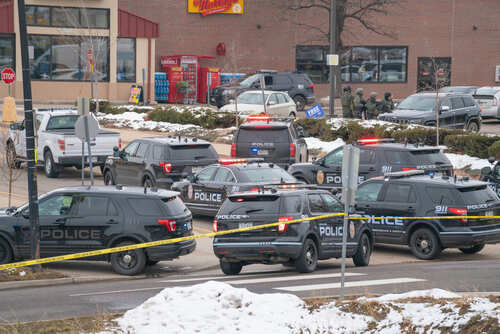
Boston and Cambridge residents watched a nightmare unfold when 46-year-old Tyler Brown allegedly walked down Memorial Drive in broad daylight, firing a long gun at passing vehicles and sending traffic into chaos.[2][4] Middlesex County prosecutors say he unleashed “50 to 60” rounds in a densely traveled corridor along the Charles River, striking two drivers who suffered life-threatening injuries before a Massachusetts State Police trooper and an armed Marine veteran shot and stopped him.[2][4] Brown was transported to a Boston hospital and remains in custody.[2]
Reporters and witnesses describe Brown moving in the middle of the roadway, waving the rifle and firing in an erratic fashion as cars tried to flee or stop in place.[1][2][4] Video reviewed by local outlets appears to show him casually walking while discharging the weapon as if the entire city were his personal shooting range.[4] Cambridge Police and Massachusetts State Police quickly locked down the area and told residents there was no ongoing threat once Brown was down, but the damage—both physical and psychological—was already done.[2][4]
Warnings, Psychiatric Release, and a System That Looked Away
Court documents obtained by Boston media paint a grim picture of missed opportunities in the hours and days before the shooting.[1][2] Brown had reportedly just been released from a psychiatric hospital, had relapsed, and was again using drugs, according to statements attributed to his parole officer and a roommate.[1][2] On the day of the attack, the parole officer called Brown and immediately sensed something was “not right” as Brown talked about ending his life and insisted he was not going back to prison.[1][2]
During a later video call, the parole officer reportedly saw Brown waving a semi‑automatic rifle, appearing high, and declaring that “these people are gonna [expletive] pay,” while claiming he had committed murders in the past.[1] The officer called 911 and raced toward Brown’s residence, but Brown had already left.[1][2] Police worked with the United States Secret Service to ping Brown’s phone, spotting it near Memorial Drive as an officer-safety bulletin with his photo went out to law enforcement.[2] Despite those red flags, Brown still managed to reach one of the busiest roads in Massachusetts before anyone stopped him.[1][2]
A Violent Record and a Sentence Critics Call Too Short
The outrage now boiling over is not just about the Memorial Drive gunfire; it is about the fact that Brown’s violent trajectory was well known years ago. In 2020, while already on probation for an earlier 2014 stabbing, Brown fired roughly seventeen rounds at Boston Police officers in the city’s South End, nearly killing Officer Edward Gately, who later warned in court that Brown would “hurt or kill someone.”[3][4] That prediction now looks chillingly accurate to many observers.[3]
Prosecutors in that 2020 case pushed for a ten- to twelve-year state prison sentence for armed assault with intent to murder and related firearm offenses, arguing Brown’s pattern of random violence and attacks on police made him a severe public-safety risk.[4] Instead, a judge imposed a five-to-six-year term followed by probation—a disposition that Suffolk County District Attorney Rachael Rollins described as “disappointing” and “an insult” to the officers who were nearly killed.[4] Reporting so far does not show the sentence was illegal, but it was clearly far more lenient than prosecutors requested.[2][4]
Gun-Control Failure and Public-Safety Lessons for the Rest of the Country
The Cambridge attack is already being used by Massachusetts media to “re-spark” debate on new gun-control proposals, even though Brown, as a convicted felon with a history of attacking police, was already barred from owning firearms.[4] Strict state gun laws, background checks, and weapon bans did nothing to stop him from allegedly acquiring a rifle and ammunition; law-abiding residents, not the criminal, were the ones effectively disarmed when bullets began flying.[1][4] That reality undercuts claims that additional restrictions on responsible gun owners would have prevented this tragedy.
State Police Trooper Landon Veney is being hailed as a hero after he helped take down the suspected gunman in Monday’s Cambridge shooting. https://t.co/abU5jqxoiy
— Boston.com (@BostonDotCom) May 13, 2026
For citizens across the country, especially under a federal administration now pushing tougher penalties on violent repeat offenders, the Brown case highlights where the real problem lies: lenient local sentencing, failed mental‑health supervision, and a justice system that too often gives dangerous offenders yet another chance.[2] The missing pieces in the public record—the full 2021 sentencing transcript, the parole file, and the psychiatric-release details—deserve scrutiny, not to fuel a partisan blame game, but to ensure that future judges, parole boards, and treatment facilities put the safety of families, commuters, and police officers first.[2]
Sources:
[1] Web – ‘Going to (expletive) pay’: Police report reveals new details …
[2] Web – Accused Memorial Drive gunman Tyler Brown tried to kill …
[3] YouTube – Witness describes running from gunman before Cambridge …
[4] Web – Suspected roadway gunman with reported criminal history …