

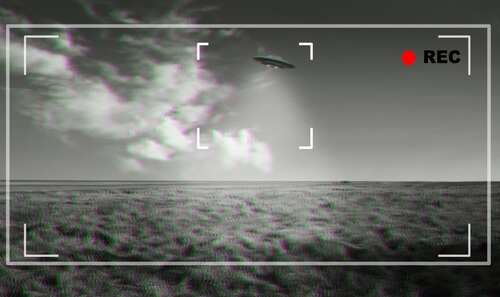
Barack Obama’s “aliens are real” chatter is back in the spotlight—and it’s a reminder that Washington can acknowledge strange aircraft while still refusing real transparency the public can verify.
Story Snapshot
- A resurfaced 2019 late-night interview shows Obama saying he asked about secret alien labs when he took office and was told none existed.
- Obama also confirmed there is official footage and records of objects in the sky that government personnel “don’t know exactly what they are.”
- The viral headlines blur a key distinction: Obama referenced unidentified aerial phenomena (UAP), not confirmed extraterrestrial life.
- A 2022 Stephen Colbert segment revived the theme, joking about Obama declining to give a straight answer on aliens.
What Obama Actually Said—and What Got Oversold
Barack Obama’s comments came from a 2019 appearance on The Late Late Show with James Corden that recirculated widely in 2025 and again in early 2026. Obama described doing what many Americans assume presidents do: asking whether the government has a secret stash of alien bodies or spacecraft. According to Obama, he was told that kind of lab or specimen program did not exist. That part is a clear denial.
Obama’s more consequential point was narrower and easier to verify in principle: he said there is “footage and records” of objects in the sky that officials cannot fully explain. He referenced unusual movement and trajectory—language that matches how UAP are typically described without leaping to “little green men.” That matters because sensational headlines can distort public understanding, turning a limited, careful statement into a sweeping “confirmation” that goes beyond what he said.
UAP vs. “Aliens”: A Basic Distinction the Media Still Blurs
UAP is a category label for sightings and sensor tracks that remain unidentified after review, not a declaration of extraterrestrial origin. Obama’s remarks fit that framework: no claim of alien life, but an acknowledgment that some observed objects are unexplained. That distinction is important for citizens who want facts, not hype. When media outlets package “unknown aircraft” as “aliens are real,” they generate clicks while muddying the difference between an unsolved data point and a proven conclusion.
Why This Keeps Coming Back: Trust, Secrecy, and the National Security Angle
The recurring attention isn’t just pop-culture obsession. UAP talk persists because the government has admitted—at least in broad strokes—that it has records it can’t neatly categorize. That reality leaves two possibilities open without proving either: advanced foreign technology, or something not yet understood. For Americans who lived through years of political spin and selective transparency, the frustration is predictable. People hear, “We have footage,” then get little follow-up that ordinary citizens can independently evaluate.
Colbert’s 2022 Moment Shows How Quickly Serious Questions Become Comedy
Stephen Colbert’s 2022 discussion added another layer, describing how Obama “wouldn’t answer” a direct question and joking that this amounted to a “yes.” That’s entertainment, not evidence, but it illustrates how this topic is handled in mainstream spaces: a mix of teasing, partial disclosures, and shrugging evasions. Comedy can be harmless, yet it also normalizes a pattern where powerful figures hint at mystery while the public is left with fragments, not a clear, document-driven accounting.
What We Can—and Can’t—Conclude From the Available Reporting
Based on the available material, the strongest documented claim is simple: Obama acknowledged unexplained objects exist in official records, and he denied knowledge of any secret program housing alien bodies or ships. Nothing in the provided sources proves extraterrestrial life or a government cover-up of “aliens.” The gap between “unidentified” and “alien” remains exactly that—a gap. If officials want public trust, clearer disclosure standards and verifiable releases would beat recycled clips and viral headlines.
Obama says aliens are ‘real, but I haven’t seen them’ in out-there new interview https://t.co/NOx6PnzeTV pic.twitter.com/1hnyIJufNg
— New York Post (@nypost) February 15, 2026
The bigger takeaway for voters in 2026 is cultural as much as scientific: Washington’s credibility problems don’t disappear just because a story is “fun.” When institutions communicate in half-answers—especially through late-night banter—Americans reasonably suspect they’re being managed instead of informed. Whether UAP ultimately trace back to drones, foreign platforms, sensor quirks, or something else, the public’s demand is the same: show the work, release what can be released, and stop laundering uncertainty into clickbait certainty.
Sources:
Barack Obama shared ‘truth’ after being asked if he knew about aliens and UFOs