
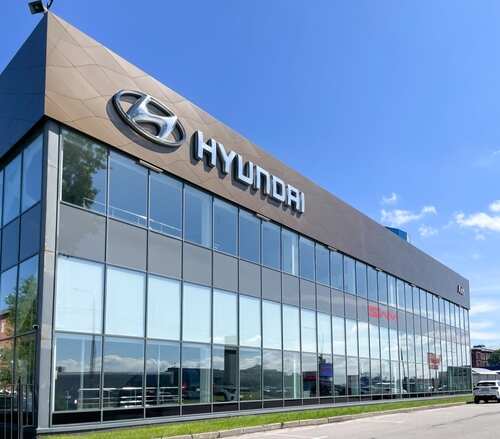
Hundreds detained in a federal immigration raid at Hyundai’s Georgia battery plant construction site signal a renewed crackdown on illegal employment, drawing national attention and sparking diplomatic tensions.
Story Snapshot
- At least 450 individuals suspected of being unlawfully present in the U.S. were detained during the largest manufacturing site immigration raid in years.
- The raid temporarily halted construction at Hyundai’s $7.6 billion battery plant, the largest industrial investment in Georgia’s history.
- Federal agencies are intensifying efforts to enforce workplace immigration laws and target unlawful employment practices under President Trump’s second term.
- Diplomatic tensions have emerged as South Korea’s government protests the treatment of its nationals and seeks assurances for Korean businesses operating in the U.S.
Federal Immigration Raid Disrupts Major Georgia Manufacturing Project
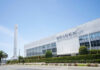
On September 4, 2025, U.S. Immigration and Customs Enforcement led a coordinated operation at the Hyundai–LG Energy Solution battery plant construction site in Ellabell, Georgia, resulting in the detention of at least 450 people suspected of being unlawfully present in the country. The raid, supported by the Department of Homeland Security, FBI, ATF, DEA, and Georgia State Patrol, is part of an ongoing criminal investigation into alleged unlawful employment practices. Construction at the battery facility was temporarily suspended, but the adjacent Hyundai EV manufacturing plant remains operational.
This large-scale action marks the most significant workplace immigration enforcement at a U.S. manufacturing site in several years. The Hyundai–LG Energy Solution battery plant represents a $7.6 billion investment, making it Georgia’s largest single industrial project and a crucial component of the region’s economic development. While none of those detained were directly employed by Hyundai, they were working on the construction site, often hired through subcontractors now under federal scrutiny. These developments come amid heightened federal attention to labor practices in the rapidly expanding electric vehicle and battery sectors.
Policy Shift and Enforcement Under Trump Administration
The raid underscores a dramatic shift in federal immigration enforcement since President Trump’s return to office. His administration has declared a national emergency at the southern border, expanded expedited removal policies, and set an unprecedented goal of deporting one million immigrants annually. There is a renewed emphasis on workplace enforcement, with federal authorities expanding arrest quotas and targeting industries—like manufacturing and construction—where unlawful employment is suspected. Local law enforcement agencies are being brought in as partners, increasing the scale and reach of these operations, and sanctuary jurisdictions are facing potential penalties for refusing cooperation.
President Trump’s policies have also included the Laken Riley Act, mandating detention for immigrants charged with certain crimes, and the “One Big Beautiful Bill Act,” which dramatically expands the budget and authority for immigration detention. These moves have led to a sharp decrease in illegal border crossings and signaled to both American employers and foreign investors that compliance with U.S. immigration law is a renewed and urgent priority. For conservative Americans, these actions are restoring confidence that the rule of law and protection of U.S. jobs are once again front and center in federal policy.
Stakeholders and Diplomatic Reactions
The operation at the Hyundai site has drawn in a complex array of stakeholders. Federal agencies, led by ICE and DHS, are tasked with enforcing immigration and labor laws, while Hyundai and LG seek to protect their corporate reputation and investment. South Korea’s government has formally protested the detention of its nationals and dispatched consular officials to Georgia, raising questions about the balance between robust enforcement and maintaining healthy international business relations. Construction contractors and their hiring practices are now under federal investigation for potentially facilitating illegal employment through layers of subcontracting.
The local workforce and community in Bryan County face uncertainty, as the suspension of construction threatens jobs and economic momentum. Meanwhile, the broader debate over immigration enforcement—especially as it relates to large-scale projects and foreign investment—has been reignited, with business groups voicing concern about regulatory unpredictability and immigration advocates emphasizing due process for detained workers.
At least 450 people taken into ICE custody at Hyundai plant in Georgia https://t.co/QniCD1bNsG
— liz (@ElizabethL62582) September 5, 2025
In the short term, the raid has disrupted a landmark economic development initiative, highlighting the risks to companies and communities when immigration compliance is not rigorously maintained. In the long term, experts predict increased regulatory oversight, higher compliance costs for contractors, and potential shifts in foreign investment strategies if the U.S. is perceived as a higher-risk environment for major international projects. The federal government, however, is making clear that upholding immigration law and protecting American workers will not be compromised—an outcome that resonates with those who have long demanded an end to the era of unchecked illegal employment and porous labor standards.
Sources:
Federal agents arrest hundreds at Hyundai plant construction site in Georgia
450 people in ICE custody after raid at Hyundai plant in Georgia