

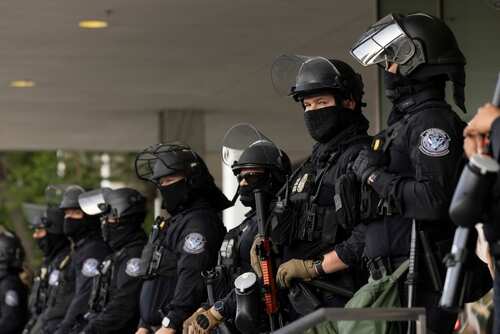
The use of AI to unmask ICE officers threatens privacy and safety, igniting fierce debate among law enforcement and civil rights advocates.
Story Highlights
- AI tools unveil identities of ICE officers at Alligator Alcatraz detention center.
- Exposure raises concerns over privacy and safety of law enforcement personnel.
- Federal judge orders the controversial facility’s closure amid protests.
- Ongoing debates about AI’s role in activism and transparency.
AI Unmasking Sparks Heated Privacy Debate
In a controversial move, activists have deployed advanced AI technology to publicly reveal the identities of ICE officers at the Alligator Alcatraz detention center in Florida. This unprecedented use of AI for doxxing has raised significant concerns about privacy and safety among law enforcement personnel. The AI-driven identification process has resulted in public exposure and subsequent threats against officers, escalating tensions in an already charged environment.
As the facility faces mounting criticism for alleged human rights abuses and environmental violations, the unmasking of ICE officers adds a new layer of complexity to the ongoing debate. Activists argue that such measures are necessary to hold individuals accountable for their actions, particularly in light of the detainee uprisings and reported use of force by guards. However, law enforcement officials warn that these actions could endanger officers and undermine their ability to perform their duties effectively.
Facility Closure Amid Legal and Public Pressure
Alligator Alcatraz, a large-scale immigration detention center established in the Florida Everglades, has been at the center of intense scrutiny. The facility was rapidly constructed to accommodate increased immigration enforcement efforts, but quickly gained notoriety for alleged abuses and poor conditions. As a result, a federal judge has ordered the closure of the center, despite government appeals to keep it open.
The closure order comes as a response to lawsuits filed by environmental groups and the Miccosukee Tribe, citing harm to the Everglades and Indigenous rights. This legal action, combined with public protests and political opposition, has put significant pressure on the government to address the facility’s issues. The ongoing reduction of the facility’s population is a step towards compliance with the court’s decision.
Balancing Transparency and Privacy
The use of AI to identify ICE officers has ignited a broader conversation about the balance between transparency and privacy, particularly in the context of government accountability. While some view AI unmasking as a tool for justice and transparency, others see it as a dangerous precedent that could lead to harassment or violence against law enforcement personnel.
This incident also raises questions about the ethical deployment of AI technologies and the need for robust oversight. As lawmakers and activists continue to demand transparency and accountability, the debate over AI’s role in journalism and activism is likely to intensify. Future legislation may need to address these complex issues to protect both individual privacy and the public interest.
🚨BREAKING — AI is unmasking ICE officers. Can Washington do anything about it?
An activist has started using AI to identify ICE agents beneath their masks — a use of the technology sparking new political concerns over AI-powered surveillance.https://t.co/WkCyHyTqDH
— Count Duckula (@TromeoOfficial) September 1, 2025
As the situation develops, it remains crucial for policymakers to consider the implications of AI-driven accountability efforts. The potential chilling effect on law enforcement recruitment and retention, as well as the broader impact on privacy and transparency, requires careful consideration. The ongoing discussions and legal proceedings will likely shape the future landscape of technology use in activism and law enforcement.
Sources:
Closure of Florida’s ‘Alligator Alcatraz’ immigration detention center
Reports of Uprising at ‘Alligator Alcatraz’
“`