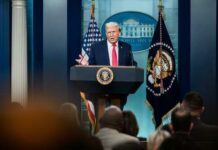

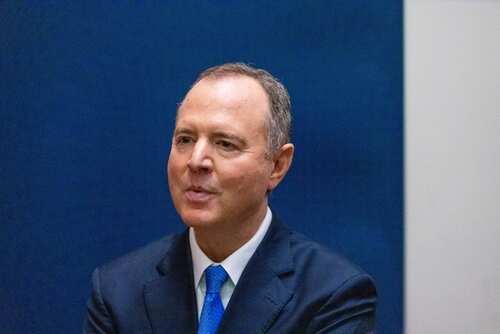
In a twist of partisan irony, Adam Schiff faces allegations eerily similar to those he once used against Donald Trump—mortgage fraud.
At a Glance
- Adam Schiff accused of misrepresenting his primary residence on mortgage documents.
- Criminal referral made to the DOJ by William Pulte, FHFA director.
- Trump amplifies allegations as political retribution for past impeachment proceedings.
- Schiff denies wrongdoing, claiming political motivation behind allegations.
Mortgage Fraud Allegations Against Schiff
Adam Schiff, Democratic Senator from California, is under fire for allegedly misrepresenting his primary residence on mortgage documents for his property in Potomac, Maryland. This controversy erupted after a criminal referral was made by William Pulte, director of the Federal Housing Finance Agency, suggesting possible mortgage and bank fraud. The referral followed an internal review by Fannie Mae’s Financial Crimes Division, which scrutinized Schiff’s mortgage documents from 2009 to 2020.
The allegations against Schiff have become a hot topic, with former President Donald Trump seizing the opportunity to highlight what he perceives as hypocrisy. Schiff, who played a pivotal role in the impeachment proceedings against Trump back in 2019, now finds himself accused of similar financial misdeeds. Trump did not miss the chance to publicize these allegations on his Truth Social platform, painting them as proof of Schiff’s duplicity.
Political and Legal Implications
The criminal referral and subsequent media frenzy have added fuel to an already polarized political climate. Mortgage fraud, particularly misrepresentation of primary residence status, is a federal crime. However, cases involving sitting members of Congress are rare. Schiff’s spokesperson has asserted that he has always been transparent about his dual home ownership and followed legal and House counsel advice in arranging his mortgages.
The Department of Justice has received the criminal referral, but as of now, no formal investigation or charges have been announced. The political implications are significant, with Republicans using the allegations to attack Schiff’s credibility, while Democrats dismiss them as politically motivated retaliation. This case, if pursued, could set a legal precedent for prosecuting sitting members of Congress for mortgage-related offenses.
The Broader Context
This situation unfolds in a deeply divided political environment where both parties frequently accuse each other of legal and ethical violations. The allegations against Schiff echo the civil fraud case brought against Trump by New York Attorney General Letitia James, although Trump was not criminally charged in that instance. The media’s portrayal of these allegations will likely shape public perception of both Schiff and Trump, potentially influencing upcoming elections.
In the broader context, this case underscores the importance of accurate financial disclosures for public officials. It also highlights the risks of politicizing legal processes, which can lead to a tit-for-tat escalation. Legal experts emphasize that proving mortgage fraud requires demonstrating intentional misrepresentation and material benefit, which can be challenging given the commonality of dual residency among members of Congress.
What Lies Ahead?
The future of this case remains uncertain as the DOJ’s response to the referral is pending. Should charges be filed, the case may further erode public trust in political institutions and the impartiality of federal investigations. For now, the allegations against Schiff serve as a reminder of the political and legal complexities that arise when financial disclosures are weaponized in partisan battles.
As the situation develops, stakeholders from all sides will closely watch how the DOJ handles the referral and whether it leads to a formal investigation or prosecution. In the meantime, Schiff’s reputation and political career hang in the balance, as do the broader implications for political accountability and transparency.