
Zelensky’s push for regime change in Moscow—and his demand that the world confiscate Russian assets outright—just lit a fire under the simmering cauldron of European security politics, raising questions that should concern every American who values common sense, sovereignty, and the rule of law.
Story Snapshot
- Zelensky called for an international campaign to oust Russia’s leadership at the OSCE’s Helsinki conference, escalating Ukraine’s demands beyond battlefield victory.
- He insisted that the West not only freeze but fully confiscate Russian assets to bankroll Ukraine’s defense and reconstruction.
- The speech came amid deadly Russian missile and drone barrages on Ukrainian cities—and Ukrainian strikes inside Russia.
- Western leaders now face mounting pressure to adopt radical new measures, with legal and geopolitical risks for all involved.
Zelensky’s Gambit: Pushing Western Lines—and Patience
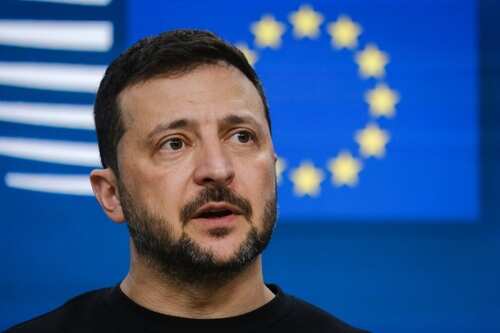
Ukrainian President Volodymyr Zelensky did not mince words at the 50th anniversary Helsinki summit of the Organisation for Security and Co-operation in Europe (OSCE): only a change in Russia’s government, he declared, would bring true peace and security to Europe. In a move that should send chills down the spine of anyone who remembers the disastrous regime change disasters of the last thirty years, Zelensky demanded the world unite to “aim to change the regime in Russia.” According to multiple international news agencies, he insisted that as long as the current Russian leadership remains in power, Moscow will remain a threat—war or no war. The Ukrainian leader also called for the outright confiscation of Russian assets, not just freezing them, to fund Ukraine’s ongoing defense and postwar recovery. This goes well beyond previous calls for strong sanctions and lays bare Kyiv’s expectation that Western taxpayers and governments should shoulder unlimited risk to underwrite Ukraine’s future, no matter the fallout for global markets, legal norms, or Western citizens themselves.
The Helsinki conference, long a symbol of efforts to build peace and respect sovereign borders, now found itself the stage for an international call to overturn a nuclear-armed state’s government. Zelensky’s message, delivered via video amid ongoing Russian missile and drone attacks on Ukrainian cities, followed a night of carnage that left civilians dead and vital infrastructure in ruins. Meanwhile, Ukrainian drones reportedly struck targets inside Russia, escalating tit-for-tat violence that shows no sign of abating. With both sides locked in a deadly stalemate, the Ukrainian government’s new diplomatic line is clear: nothing short of total political transformation in Moscow will satisfy Kyiv or safeguard Europe’s future.
Regime Change Rhetoric: A Dangerous New Precedent
The notion that the West should campaign for regime change in Russia is not only a significant departure from previous diplomatic language—it is a step into uncharted and dangerous territory. For decades, Western leaders, even in times of severe tension, have stopped short of openly demanding the ouster of another government, especially one armed to the teeth with nuclear weapons. The Helsinki Final Act of 1975, whose anniversary the conference marked, enshrined principles of territorial integrity and mutual respect—principles Russia shattered with its 2022 invasion of Ukraine. But the idea that international stability depends not just on a change in Russian policy, but a change in Russian leadership, carries echoes of past foreign policy blunders that have left countries in chaos and Americans footing the bill.
Calls for regime change are not just controversial—they are legally and diplomatically fraught. As legal experts note, openly advocating for the overthrow of another nation’s government violates the very international principles the OSCE was created to protect. It risks hardening the resolve of the Russian regime, providing propaganda ammunition, and could set a precedent that future adversaries might one day use against the United States or its allies. Confiscating, rather than freezing, Russian state and oligarch assets could also upend international financial norms, threatening global markets and raising the specter of tit-for-tat seizures targeting American and European property abroad. This is not just a debate for diplomats and lawyers—it is a question of basic common sense: how much risk should American taxpayers, businesses, and soldiers be expected to bear for another nation’s strategic ambitions?
Western Leaders Face a High-Stakes Fork in the Road
Europe’s political establishment now faces a moment of decision. Zelensky’s speech landed as Western governments, already battered by years of economic turmoil, inflation, and endless spending on foreign wars, weigh the wisdom of taking even more drastic steps. The United States, under President Trump, has signaled a return to a “America First” approach, prioritizing national security, border enforcement, and fiscal sanity after the chaos and excess of the Biden years. Yet European leaders are under growing pressure from Kyiv to escalate their support—both militarily and financially—at precisely the moment their own publics are losing patience with open-ended commitments and soaring energy prices.
The legal and geopolitical risks of these demands are immense. Confiscating Russian assets on a mass scale, as Zelensky proposes, could trigger retaliatory measures, lawsuits, and a loss of trust in Western financial institutions. Pushing for regime change in Moscow risks all-out confrontation with a nuclear-armed adversary, with potential consequences for every American family. While some European leaders echo Zelensky’s calls for tougher action, others warn that such steps could backfire, fueling instability and pushing Russia further from any negotiated settlement. The OSCE itself is hamstrung, with Russia having suspended its participation in protest at what it calls discrimination. The result is a diplomatic deadlock, with ordinary citizens on both sides paying the price for elite brinksmanship.
Is This the Future of International Order?
The fallout from Zelensky’s demands will not be confined to the battlefields of Ukraine. If the West adopts a policy of regime change and asset confiscation, it could fundamentally reshape the rules of international relations, making the world less stable and more prone to confrontation. Energy markets, already roiled by years of conflict, could face fresh shocks. International banks and businesses could find themselves caught in a web of legal uncertainty, forced to choose between compliance with Western policy and exposure to Russian retaliation. Meanwhile, the precedent set by such actions would hang over every future crisis: today it’s Russia, tomorrow it could be any country out of favor with the West’s political class.
The American public, having endured the inflation, open borders, and endless government overreach of the previous administration, has every right to ask: where does it end? Should U.S. taxpayers be forced to subsidize foreign wars and bail out foreign governments indefinitely? Should American legal norms and property rights be sacrificed on the altar of another nation’s ambitions? These are not abstract questions—they are questions of sovereignty, security, and common sense. If history has taught us anything, it’s that regime change is a gamble with deadly consequences, and that the American people deserve leaders who put their interests—not globalist fantasies—first.