
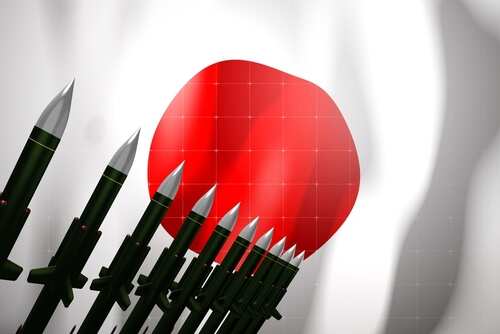
Japan is abandoning its postwar pacifist comfort zone and positioning missile defenses within striking distance of a Taiwan crisis—an awakening that will reshape the Indo-Pacific and test America’s alliance backbone.
Story Snapshot
- Japan is moving from constitutional pacifism toward a more autonomous defense posture as threats from China and North Korea intensify.
- Tokyo has confirmed surface-to-air missile deployments on Yonaguni Island, roughly 70 miles from Taiwan, as part of fortifying its southwestern islands.
- Japan’s 2022 National Security Strategy accelerated changes after Russia’s invasion of Ukraine, pairing alliance reliance with expanded Self-Defense Force capabilities.
- Public support for larger defense spending and “counter-strike” capability signals a real domestic shift, though funding debates remain unresolved.
Yonaguni Missile Deployment Puts Japan on the Front Line
Japan has confirmed the deployment of advanced surface-to-air missiles on Yonaguni Island, a small outpost in the country’s southwestern chain located about 70 miles from Taiwan. The move reflects Tokyo’s effort to harden defenses along islands that would be exposed first in any regional conflict, especially one involving the Taiwan Strait. For Americans watching China’s expansion, the message is straightforward: Japan is preparing for realities that polite diplomacy cannot wish away.
Japan’s island geography has long dictated security choices, but the pace of adjustment has quickened. North Korean missile tests have repeatedly forced Japan to confront the limits of deterrence by statements alone, while China’s growing reach raises the stakes for every nation near the first island chain. The Yonaguni deployment fits into a broader effort to improve air and missile defense coverage and reduce vulnerabilities that an adversary could exploit early in a crisis.
From Article 9 Pacifism to “Proactive Defense” Politics
Japan’s post-1945 security model was shaped by the U.S. occupation and a constitution that renounced war, anchored by Article 9. For decades, that framework produced what analysts describe as a constrained posture under the U.S. security umbrella. Recent leaders and factions inside the ruling Liberal Democratic Party have argued that the strategic environment no longer allows comfortable ambiguity. Research cited here describes advocacy for revising Article 9 and normalizing a more forward-leaning defense stance.
Shinzo Abe’s tenure is consistently identified as a turning point. Japan built new security institutions and passed 2015 Peace and Security Legislation enabling forms of collective self-defense, moving Tokyo closer to operating like a standard ally rather than a uniquely constrained partner. That trajectory matters to U.S. conservatives who favor burden-sharing: an ally that can do more for its own defense can also contribute more credibly to regional deterrence—without Washington carrying every load alone.
Ukraine’s Shock and Japan’s 2022 Strategy Reset
Russia’s invasion of Ukraine in 2022 served as a catalyst for Tokyo’s updated National Security Strategy. Analysts summarized the approach as resting on three pillars: strengthening the U.S. alliance, boosting Japan Self-Defense Force capabilities, and deepening ties with other like-minded partners. The underlying logic is not ideological fashion—it is a practical response to coercion and revisionism. Japan’s planning assumes that what happens in Europe can echo in Asia, especially around Taiwan and sea lanes.
Alliance “Spear and Shield” Evolves Toward Greater Japanese Autonomy
Several sources describe an evolution from the traditional “spear and shield” division of labor toward a more balanced partnership in which Japan duplicates some U.S. assets and hedges against overdependence. That shift does not mean abandoning the alliance; it means increasing Japanese resilience if U.S. capacity is stretched across multiple theaters. In plain terms, Tokyo appears to be reducing single points of failure—an approach Americans can understand after years of watching globalist assumptions collide with hard power.
What This Means for the U.S. Under a New Administration
For the United States in 2026, Japan’s strategic awakening is a reminder that serious allies respond to serious threats with concrete capabilities, not slogans. The research also notes unresolved debates, particularly how Japan will fund defense expansion toward levels associated with major democracies. That uncertainty is real, and it limits what can be concluded about long-term sustainability. Still, the direction is unmistakable: Tokyo is moving from debate to execution, and America’s Indo-Pacific posture will be affected by how far and how fast Japan goes.
Japan's Strategic Awakening https://t.co/NTXbtI7Q36
— zerohedge (@zerohedge) March 11, 2026
For conservative readers, the bigger takeaway is strategic clarity. Authoritarian pressure—whether from Beijing’s regional ambitions, Pyongyang’s missiles, or Moscow’s precedent—has a way of forcing democracies to choose preparedness over performative politics. Japan’s moves also highlight a principle Washington often forgets during eras of overspending and misplaced priorities: deterrence depends on capability, geography, and will. Japan is signaling it intends to have all three, even if domestic politics must catch up.
Sources:
Tokyo’s awakening: Japan in the Indo-Pacific after Russia’s invasion of Ukraine
Japan’s awakening to a multipolar world
Japan’s strategic re-awakening