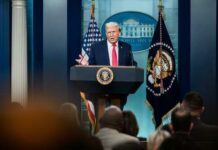

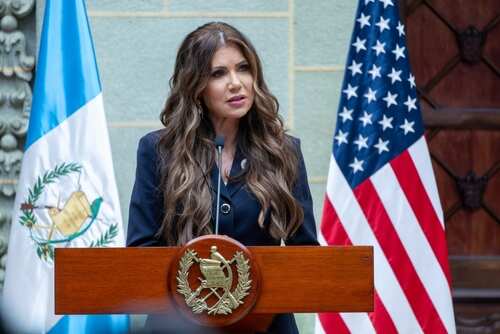
Kristi Noem’s visit to Portland’s ICE facility ignites a federal-local clash over immigration enforcement, shaking the pillars of local autonomy.
Story Snapshot
- Homeland Security Secretary Kristi Noem visits Portland’s ICE facility amid ongoing protests.
- Noem criticizes local leadership, suggests federal intervention may be necessary.
- Portland officials consider taking over the ICE facility, potentially displacing federal tenants.
- Increased police presence and road closures follow Noem’s visit.
Federal Pushback Against Local Resistance
Homeland Security Secretary Kristi Noem’s visit to the U.S. Immigration and Customs Enforcement (ICE) facility in Portland, Oregon, on October 7, 2025, underscores the ongoing tension between federal and local authorities. Noem’s critique of Portland’s handling of the protests and her hint at possible federal intervention is seen as a direct challenge to the city’s Democratic leadership. The visit comes amidst clashes between protesters, counter-protesters, and federal agents, illustrating the deep divide over immigration enforcement policies.
Meanwhile, Portland’s leadership, spearheaded by Mayor Keith Wilson, is contemplating a bold move to take over the ICE facility’s lease. The city aims to remove federal tenants, citing a desire to better manage local public safety and uphold civil liberties. This potential takeover highlights a significant property dispute, with the city attempting to assert control over a federal establishment. Critics argue that such a move could undermine federal authority and complicate immigration enforcement in the region.
Protests and Policing in Portland
Protests outside the ICE facility have been ongoing since June 2025, reflecting long-standing local opposition to federal immigration policies. These demonstrations, often marked by clashes with federal agents, have intensified following Noem’s visit. In response, the Portland Police Bureau has increased its presence around the facility, implementing road closures to manage the protest activities. Federal law enforcement officials have requested restricted access zones, prompting further debate about balancing security with civil liberties.
Mayor Wilson publicly criticized the conduct of federal agents, emphasizing Portland’s commitment to free speech and denouncing the use of excessive force. The city has called for federal agents to cease using chemical munitions, to wear body cameras, and to identify themselves properly. Despite these demands, the federal government continues to assert its authority, framing the protests as a threat to public safety.
Potential Implications of the Federal-Local Conflict
The ongoing standoff between federal and local authorities in Portland could have far-reaching implications. In the short term, increased tensions and operational disruptions may impact daily life for residents and businesses near the ICE facility. National media attention on the situation could shape public perception and influence policy discussions at higher levels. In the long term, the outcome of this conflict may set a precedent for how similar disputes over federal properties and enforcement practices are handled in other cities.
As the situation develops, the potential for further escalation remains high. Both sides continue to assert their positions, leaving the future of the ICE facility and the broader debate over immigration enforcement uncertain. The city’s next steps, particularly concerning the proposed takeover of the ICE facility, will be closely watched by both supporters and critics of federal immigration policies.
Sources:
Portland weighs ICE facility takeover – OPB
Mayor Wilson: Feds, your actions are deeply disturbing – Portland.gov