
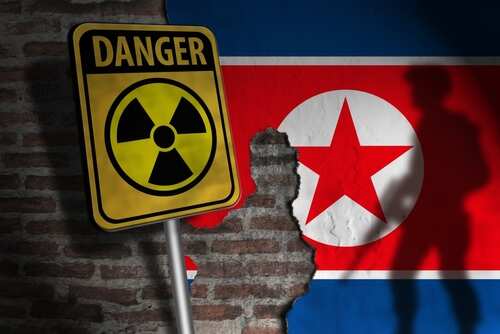
North Korea is blasting America as a “terrorist state” in public—while quietly freezing out Iran to keep a door open to President Trump.
Story Snapshot
- South Korea’s intelligence service says Pyongyang has avoided sending weapons to Iran and even broke protocol by staying silent after Iran’s Supreme Leader Ali Khamenei died.
- Kim Jong Un used a late-March parliamentary session to condemn U.S. and Israeli strikes on Iran and to reassert that North Korea’s nuclear status is “irreversible.”
- The mixed signals suggest a two-track strategy: loud propaganda for domestic and allied audiences, cautious moves designed to avoid provoking Washington.
- China is simultaneously tightening its economic link to North Korea, including the resumption of Beijing–Pyongyang trains and expanding trade.
NIS: Pyongyang keeps Iran at arm’s length while watching Trump
South Korea’s National Intelligence Service assesses that North Korea has been distancing itself from Iran even as the Middle East heats up. The reported indicators are unusually concrete for a regime that typically performs solidarity theater with fellow U.S. adversaries: no weapons shipments to Tehran and no public condolence messaging after the death of Iran’s Supreme Leader Ali Khamenei. Seoul’s read is that Kim Jong Un is positioning for possible diplomatic space with President Donald Trump.
That calculation matters because North Korea and Iran have a long history of covert military ties dating back decades, including missile-related cooperation that has drawn international scrutiny and sanctions pressure. If Pyongyang is truly pausing any material support when Tehran would most want it, that’s a significant deviation from past behavior. The available reporting, however, leans heavily on South Korean intelligence assessments, and independent confirmation of every detail remains limited in public sources.
Anti-U.S. rhetoric spikes after Iran strikes, but actions look restrained
Kim’s messaging has not softened. During a March 23–24, 2026 parliamentary session, he condemned U.S. actions related to strikes on Iran, labeling Washington a “terrorist state” and portraying American power as lawless. At the same time, he reiterated that North Korea’s nuclear program is “irreversible,” reinforcing the regime’s long-standing demand to be treated as a permanent nuclear power rather than a negotiator willing to disarm.
Analysis of North Korean media and expert commentary describe this initial response to the Iran strikes as unusually sharp in tone. That kind of language is familiar propaganda, but the timing suggests Pyongyang wanted to signal defiance quickly—especially to domestic audiences trained to view hostility toward the United States as proof of regime strength. The key wrinkle is that propaganda doesn’t automatically translate into operational support for allies like Iran, and the reported restraint on arms is the point driving fresh attention.
Why Pyongyang might hedge: deterrence lessons and Trump diplomacy
Several analysts argue the Iran conflict underscores a harsh lesson North Korea has been selling for years: nuclear weapons deter regime-threatening pressure in a way conventional forces do not. In that framing, Iran’s vulnerability—and North Korea’s relative “immunity”—becomes a justification for Kim to refuse denuclearization while still exploring a narrow, transactional relationship with Trump. Expert commentary also suggests Kim could accept talks that effectively legitimize his arsenal rather than dismantle it.
For U.S. conservatives, the immediate takeaway is less about trusting Pyongyang and more about recognizing leverage and limits. North Korea’s “irreversible” nuclear claim makes clear that any negotiation framed around rapid disarmament faces steep headwinds. At the same time, a North Korea that avoids directly arming Iran—if the intelligence assessment holds—could reflect the deterrent effect of U.S. strength and the reality that adversaries respond when they believe America will act decisively.
China’s growing economic role complicates U.S. options
While North Korea signals possible interest in keeping lines open to Trump, Beijing appears to be reinforcing its own influence. Reporting points to the resumption of Beijing–Pyongyang train service for the first time in years, plus a broader rebound in trade and infrastructure activity along the border. A North Korea with improved economic oxygen from China is harder to pressure and may feel freer to stall diplomacy while maintaining a confrontational posture toward Washington.
That tension leaves the United States balancing deterrence, alliance management, and the constitutional expectation that foreign policy advances American security—not globalist “process” for its own sake. The research available here doesn’t confirm any direct Trump–Kim contact in 2026, and it doesn’t show Pyongyang making concessions on its nuclear posture. What it does show is a regime trying to play multiple angles: keep Iran close enough rhetorically, avoid commitments materially, and preserve optionality with Trump.
Limited public data makes it difficult to verify every operational detail behind the intelligence claims, but the broader pattern is consistent across sources: louder anti-U.S. propaganda after Iran strikes, no visible evidence of North Korean weapons flowing to Tehran, and a strategic environment shaped by China’s economic backstopping. For Americans who remember years of weak deterrence, this episode is a reminder that adversaries watch U.S. leadership closely—and recalibrate when they sense resolve.
Sources:
trump iran war preventing north korea crisis
north-korea-iran-distancing-trump-diplomacy-nis
https://www.nknews.org/?p=969445
north-korea-steps-up-anti-us-rhetoric-in-initial-response-to-strikes-against-iran