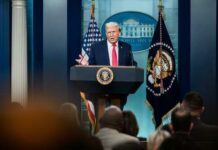


House Republicans just handed millions of workers a break the IRS never wanted you to see—no federal income tax on your first $25,000 in tips, and the left is fuming as Las Vegas celebrates a win for those who actually keep this country running.
At a Glance
- The 2026 federal budget, signed by President Trump, eliminates federal income tax on the first $25,000 in tips for service workers.
- Las Vegas, home to 21% tipped workers, hosted a high-profile House hearing to showcase the law’s immediate impact.
- Republican leaders claim local tipped workers will see a $1,300 tax cut and $230 million boost to the Vegas economy.
- Democrats and unions decry cuts to Medicaid and social programs, calling the bill a “bad bet” for working families.
House Republicans Spotlight Real Tax Relief for Service Workers in Las Vegas
Las Vegas became the epicenter of economic sanity as House Republicans, led by Rep. Jason Smith (R-MO), rolled out the red carpet for the “One Big, Beautiful Bill”—the 2026 federal budget that finally lets America’s hardest workers keep more of what they earn. The House Ways and Means Committee’s field hearing was more than political theater; it was a victory lap for a promise kept, one that started with a simple conversation between President Trump and a Las Vegas server. That conversation became a campaign rallying cry, and now, it’s the law of the land: the first $25,000 in tips are off-limits to the IRS for 2026 and beyond.
For those who’ve spent their careers busting their backs in hotels, restaurants, and casinos—where nearly a quarter of the workforce relies on tips—this isn’t some pie-in-the-sky talking point. It’s $1,300 a year back in their pockets, and a projected $230 million shot in the arm for the local economy. That’s not government handouts or “stimulus” checks for people who won’t work. That’s real relief for people who clock in, show up, and make America’s biggest tourist city tick.
The Policy: No Tax on Tips and the Fight Over Budget Priorities
President Trump’s signature on this law marks the first time in U.S. history that a federal exemption on tip income, up to a set threshold, is enshrined in the tax code. The contrast with the previous administration couldn’t be sharper. House Republicans, with Trump back in the White House, have shifted the focus to rewarding work—especially for those in industries that have been battered by shutdowns, mandates, and inflation. The move drew cheers from hospitality industry executives and service workers alike, who testified at the Las Vegas hearing about what this means for their families and communities.
But the left, predictably, isn’t celebrating. Democrats and labor unions, staging their own counter-events, blasted the bill as a “bad bet” for working families, pointing to cuts in Medicaid and other social programs tucked elsewhere in the budget. Rep. Horsford (D-NV) branded it the “One, Big, Ugly Law,” insisting that the tip tax break is a smokescreen to distract from what he calls “devastating” social safety net cuts. The rhetorical fireworks show just how far apart the two parties are on what it means to put working Americans first.
Winners, Losers, and the Clashing Visions for America’s Economy
There’s no denying the winners here: tipped workers in Las Vegas and across the country will see a bigger paycheck starting in 2026, and local businesses are bracing for a surge in consumer spending. For the first time, a waitress, bellhop, or DoorDash driver gets to keep more of their hard-earned money without Uncle Sam’s hand in the till. Hospitality and gaming giants are also breathing a sigh of relief, especially after Rep. Smith pledged to reverse a controversial gambling tax rule before year’s end—showing, again, that this Congress is listening to the industries that drive real jobs.
On the other side, critics warn that the tax relief comes at a cost. They claim that cuts to Medicaid and other benefits will hit low-income families hardest, and that the fiscal impact of the tip exemption could strain the federal budget in the long run. Labor unions argue that the benefits are uneven, and that higher earners in the service sector will see the biggest gains. Economists and policy analysts are already calling for close monitoring, acknowledging the unprecedented nature of the policy and the political gamble Republicans have taken by betting on growth over welfare expansion.
Las Vegas Field Hearing Sets the Tone for a New Era of Pro-Worker, Pro-Growth Policy
The message from the House field hearing was clear: the days of punishing work and subsidizing dependency are over. The “No Tax on Tips” policy sends a message that government should reward, not penalize, the people who make America’s cities thrive. Local testimony underscored the real-world impact—workers who once dreaded April 15 now have a little breathing room, and small business owners finally see Washington delivering on a promise to Main Street instead of K Street.
The debate is far from over, with Democrats and their union allies promising to keep the heat on over social program cuts. But for now, the tip tax exemption stands as a rare, tangible win for everyday Americans in an era when government overreach and endless spending have finally hit a wall. Whether this is the beginning of a true shift toward constitutional, common-sense governance—or just a flash in the pan—remains to be seen. But Las Vegas, for once, is betting on the house—and the house is the American worker.
Sources:
House Ways and Means Committee
People’s Action / Labor Advocacy