

A skyscraper-sized iceberg is drifting so close to Greenland’s shores that it has forced the closure of vital infrastructure, cut off the food supply, and left an entire community in suspense—while the world’s “experts” claim it’s all just another sign of “climate change” business as usual.
At a Glance
- A massive iceberg is threatening the Greenlandic village of Innaarsuit, shutting down critical businesses and services.
- Emergency warnings remain in effect as the behemoth of ice lingers perilously close to homes and harbors.
- Officials and scientists cite “climate change” and accelerated glacier melt for the increase in dangerous iceberg calving events.
- Local residents are caught between fascination and fear as their safety and livelihoods hang in the balance.
A Titanic-Sized Threat Inches Closer to Home
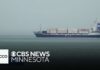
A behemoth iceberg—large enough to dwarf city skyscrapers—has drifted into dangerous proximity to Innaarsuit, a small settlement perched on Greenland’s western coast. The iceberg currently looms near the town’s harbor, threatening both the Royal Greenland fish factory and the only local food store. For the practical and hard-working residents, the iceberg’s presence has become an existential threat, prompting local authorities to issue emergency warnings, shutter businesses, and advise people to stay clear of the danger zone. This is not a drill; it’s a real-world disaster movie where the plot is written by the unyielding forces of nature, not Hollywood screenwriters.
This isn’t the first time the people of Innaarsuit have faced such peril. Back in 2018, another massive iceberg parked itself offshore, stirring a media frenzy and forcing evacuations. Yet here we are again, seven years later, with another frozen juggernaut threatening to upend daily life. Residents are left wondering if this is the new normal, while global experts shake their heads and serve up more “climate change” talking points. Meanwhile, the only certainty is that local livelihoods and safety are hanging by a thread, and the so-called solutions from far-off capitals offer little comfort to the people staring out their windows at a wall of ice.
Emergency Measures Leave a Community in Limbo
The iceberg’s arrival has forced the shutdown of essential services, including the fish factory—a major employer and economic lifeline—and the community’s only food store. Local authorities have issued public safety warnings and closed off access to the harbor, citing the risk of collapse or calving, which could trigger tsunamis or catastrophic flooding. Residents, especially those with mobility issues, have been urged to avoid gathering near vulnerable sites and to prepare for possible evacuation. Emergency services remain on high alert, ready to act at a moment’s notice.
The iceberg has lingered near Innaarsuit for over a week, sometimes drifting away only to return like an unwelcome guest. The uncertainty is palpable, with contingency plans in place but no one sure if or when disaster might strike. The town’s leaders, backed by scientific advisors, are walking a tightrope between protecting lives and minimizing economic disruption. Meanwhile, business owners and residents try to keep a stiff upper lip, their patience worn thin by the endless cycle of crisis, closure, and caution.
Experts Blame “Climate Change” as Locals Pay the Price
Predictably, scientists and climate researchers are swooping in to cite accelerated glacier melt and “climate change” as the culprits behind the surge in massive iceberg calving events. According to the National Snow and Ice Data Center, the 2025 melt season is already running above average on Greenland’s west coast, with more frequent and larger icebergs posing new threats to coastal communities. Researchers argue that these events are the direct result of global warming, which has sped up glacier flow and increased crevasse formation across the region.
But while the experts debate policy and float adaptation theories, it’s the people of Innaarsuit who are left to pick up the pieces. With the fish factory closed and food supplies threatened, economic losses are mounting and community cohesion is being put to the test. The political pressure is also rising, as locals demand real solutions—ones that prioritize their safety and livelihoods over academic posturing and endless international conferences. The growing frequency of these iceberg incidents is a stark reminder that high-minded rhetoric does little to protect ordinary people from the unforgiving realities at the edge of the Arctic.
A Warning for All Coastal Communities
Innaarsuit may be the latest community to face an iceberg dead ahead, but it won’t be the last. As glacial melt accelerates, more settlements across Greenland—and the broader Arctic—will find themselves in the crosshairs. Fisheries face disruptions, supply chains are threatened, and the specter of permanent displacement hangs over entire communities. This is not just a Greenlandic problem; it’s a wake-up call for every coastal town forced to navigate the consequences of real-world environmental change.
While policymakers and scientists wring their hands and issue reports, it’s local families who must endure the daily uncertainty and disruption. Their resilience is admirable, but their patience is not infinite. Innaarsuit’s iceberg ordeal is a chilling illustration—literally—of how distant debates over “climate change” and adaptation play out on the ground, where the stakes couldn’t be higher and the solutions couldn’t be more urgent.
Sources:
EurekAlert! – Greenland’s ice sheet and iceberg calving
National Snow and Ice Data Center – 2025 melt season analysis
UArctic – Greenland’s Glaciers: Bridging Science and Local Knowledge
Belfer Center – Greenland ice sheet, sea-level rise, and coastal communities