
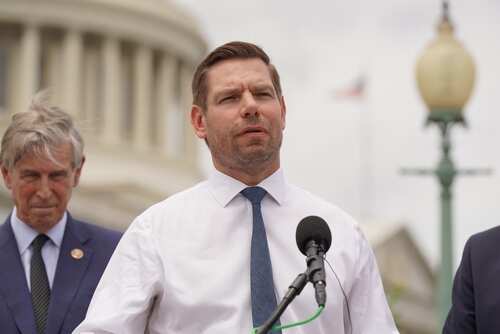
Former Congressman Eric Swalwell allegedly diverted $40,000 in gubernatorial campaign funds to pay a lawyer defending him against sexual misconduct allegations, raising serious questions about the misuse of donor money for personal legal troubles.
Story Snapshot
- Swalwell used $40,000 from his California gubernatorial campaign to pay lawyers defending him in the media against sexual assault allegations from a 2019 incident
- Alameda County District Attorney confirmed no criminal complaints have been filed by any alleged victims, despite public accusations
- Financial disclosures revealed the campaign payments, raising potential violations of campaign finance laws prohibiting personal use of donor funds
- The controversy emerges during Swalwell’s 2026 gubernatorial bid, threatening to derail his political ambitions
Campaign Finance Laws Under Scrutiny
Eric Swalwell’s decision to funnel campaign contributions into legal defense fees represents a troubling pattern among establishment politicians who treat donor money as personal slush funds. California campaign finance regulations explicitly prohibit candidates from using political contributions for personal expenses unrelated to campaign activities. Defending oneself against sexual misconduct allegations in the media, rather than in court, stretches the definition of legitimate campaign expenditures beyond recognition. The $40,000 payment to lawyers raises fundamental questions about accountability and whether political elites believe different rules apply to them than to ordinary Americans who work hard for their money.
No Criminal Charges Despite Public Accusations
Alameda County District Attorney Ursula Jones Dickson confirmed on April 23, 2026, that no victims have filed criminal complaints against Swalwell, despite allegations publicized by the San Francisco Chronicle involving a reported 2019 incident. The unnamed woman shared her account with media outlets but has not pursued prosecution through law enforcement channels. This disconnect between public accusations and formal legal action creates a murky situation where Swalwell faces reputational damage without the due process protections of the criminal justice system. However, the absence of criminal charges does not justify using campaign funds intended for political activities to manage personal reputation crises stemming from alleged misconduct.
Political Fallout for Gubernatorial Ambitions
The controversy strikes at a critical moment in Swalwell’s California gubernatorial campaign, potentially eroding voter trust in his integrity and judgment. California voters, already frustrated with political corruption and accountability failures, deserve candidates who respect the proper use of campaign contributions. This scandal reinforces concerns about Sacramento insiders who operate by different standards than the constituents they claim to serve. Beyond the immediate campaign damage, if California’s Fair Political Practices Commission determines Swalwell violated campaign finance laws, he could face regulatory sanctions that would undermine any future political viability and confirm suspicions about his ethical compass.
Broader Implications for Campaign Finance Oversight
Swalwell’s alleged misuse of campaign funds highlights the need for stricter enforcement of existing campaign finance regulations and potentially tighter restrictions on what constitutes permissible legal expenses. When politicians can tap donor contributions to manage personal scandals unrelated to governing or campaigning, it fundamentally corrupts the relationship between candidates and supporters who contribute expecting their money to advance political causes, not protect individuals from consequences of alleged personal misconduct. This case should prompt California lawmakers to clarify and strengthen prohibitions against personal use of campaign funds, ensuring political donations serve democratic purposes rather than functioning as personal insurance policies for politicians facing allegations of wrongdoing.
MORE TROUBLE FOR SWALWELL: Allegedly Used Campaign Cash to Pay Lawyer Representing Him Against Sexual Misconduct Accusations
READ: https://t.co/hZS6pC69wr pic.twitter.com/XZ9JJ6BB8x
— The Gateway Pundit (@gatewaypundit) April 25, 2026
The financial disclosures confirming the $40,000 payment emerged just as media scrutiny intensified around the sexual misconduct allegations, suggesting an attempt to manage the crisis through legal intermediaries rather than direct public accountability. California’s campaign finance regulators now face pressure to investigate whether Swalwell’s expenditures violated prohibitions against personal use of political contributions, a determination that could reshape standards for legal defense spending across the state’s political landscape and restore some measure of accountability to a system too often rigged in favor of well-connected insiders.
Sources:
Friday Morning Constitutional: Swalwell Used Campaign Money For Lawyer