

Elon Musk’s bold claim of driverless Tesla Robotaxis cruising Austin’s streets by the end of 2025 has sparked a wave of skepticism and curiosity across the nation.
Story Highlights
- Elon Musk announces driverless Tesla Robotaxis in Austin within weeks.
- Past delays in Tesla’s autonomy projects cause skepticism.
- Safety concerns rise as human monitors are phased out.
- Potential boost for Tesla amidst regulatory scrutiny.
Musk’s Driverless Ambition in Austin
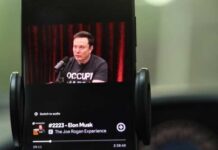
Elon Musk, CEO of Tesla, has recently made headlines by announcing that driverless Tesla Robotaxis will be operating in Austin, Texas, without human safety monitors by the end of 2025. During a videoconference at an xAI hackathon event, Musk described the unsupervised full self-driving technology as “pretty much solved,” highlighting the company’s progress in the validation phase. This announcement marks a significant milestone in Tesla’s journey toward autonomous vehicles.
While this development is seen as a technological breakthrough, it also raises questions about safety and regulatory challenges. Tesla’s history of missed deadlines and unfulfilled promises regarding self-driving features casts doubt on whether the company can meet this ambitious timeline. Nevertheless, Musk’s statement reflects a renewed push for technological advances in the autonomous vehicle sector.
Safety and Regulatory Concerns
The removal of human safety monitors from Tesla’s Robotaxis in Austin is a major shift that draws attention to potential safety risks. Previous tests of supervised Robotaxis have experienced errors and a high crash rate. With the removal of safety drivers, concerns about passenger and pedestrian safety have intensified. These concerns are compounded by the fact that Tesla’s hardware updates, necessary for improved AI performance, are not expected until 2027.
Regulatory bodies in Texas and across the United States are closely monitoring these developments. While Texas has enabled the initial tests, the broader implications of unsupervised autonomous vehicles could lead to increased scrutiny and potential regulatory hurdles. Musk’s plan to expand Tesla’s autonomous fleet will depend heavily on the successful navigation of these challenges.
Implications for the Autonomous Vehicle Industry
Tesla’s announcement has significant implications for the autonomous vehicle industry. It places pressure on competitors like Waymo to accelerate their own driverless initiatives. Furthermore, the potential economic benefits for Tesla, driven by increased stock value and market hype, are substantial. However, the company’s timeline for a fleet-wide rollout remains uncertain, with only a limited number of vehicles expected to become fully autonomous in the initial phase.
The broader implications for the industry include heightened investor skepticism and the challenge of scaling autonomous fleets. While Musk’s claims may signal progress, the reality of achieving widespread driverless operations remains fraught with technical and regulatory obstacles.
As Tesla continues its journey toward autonomy, stakeholders in Austin and beyond will be closely watching these developments. The transition to a fully autonomous fleet will require careful management of safety concerns and regulatory requirements, ensuring that technological advancements do not come at the cost of public trust and safety.
Sources:
Tesla CEO Elon Musk claims driverless Robotaxis coming to Austin in 3 weeks
Chron: Tesla Robotaxi ride in Texas