
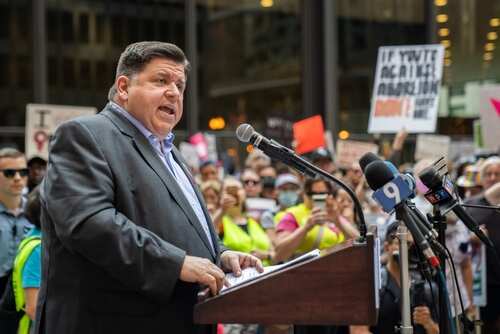
Illinois Governor JB Pritzker’s iron grip on a deep-blue state faces a critical test from Trump-backed Republicans vowing to dismantle his progressive policies on crime, bail reform, and unchecked immigration burdens.
Story Highlights
- Pritzker seeks unprecedented third term amid 2028 presidential speculation, unopposed in Democratic primary.
- Four GOP challengers, led by Darren Bailey, target Chicago crime, no-cash-bail failures, and migrant influxes straining resources.
- Bailey recommits after tragic family helicopter crash, fueled by President Trump’s personal encouragement.
- March 17, 2026, primary determines Republican nominee just yesterday, with early voting surpassing 500,000 ballots.
- Pritzker’s billionaire machine dominates fundraising, but GOP focuses on safety and suburban appeal to flip the state.
GOP Challengers Rally Against Pritzker’s Record
Four Republican candidates filed to challenge incumbent Governor JB Pritzker in the 2026 election cycle. Darren Bailey, former state senator and 2022 nominee, leads the field from his Effingham farm base. Bailey lost to Pritzker by over 12 points in 2022 but announced his bid again on September 25, 2025. His running mate, Aaron Del Mar, Cook County GOP chair, aims to bridge urban-rural divides. Campaigns spotlight Chicago’s rising crime rates and failed no-cash-bail policies that conservatives argue endanger families.
Bailey’s Resilience Amid Personal Tragedy
In October 2025, four Bailey family members, including his son, perished in a Montana helicopter crash. Despite this heartbreak, Bailey recommitted to the race in December 2025, citing direct encouragement from President Trump. This endorsement energizes conservatives frustrated with Pritzker’s anti-Trump stance, including events like Operation Midway Blitz in Chicago. Bailey’s platform demands ending no-cash-bail, removing migrants, and prioritizing public safety—core issues resonating with voters tired of leftist leniency.
Other challengers include businessman John Verive, paired with ER physician Dr. Carrie Mendoza, emphasizing anti-crime and immigration enforcement. Chris Heidner, a bipartisan donor, teams with Army veteran Robert Renteria. Gregg Moore rounds out the field as a repeat candidate. Fragmentation weakens GOP unity, yet high early voting turnout signals strong downstate support.
Pritzker’s Power Plays and National Ambitions
Pritzker, Hyatt heir and billionaire, runs unopposed for a third term, last achieved by GOP Governor Jim Thompson decades ago. He flexes influence by pouring millions into Lt. Gov. Juliana Stratton’s U.S. Senate super PAC, drawing criticism for overreach from figures like Rep. Yvette Clarke. Stratton vacated her post for the Senate bid, prompting Pritzker to select Christian Mitchell as running mate. His progressive record includes pension stabilization but also fuels GOP attacks on fiscal mismanagement echoes from Biden-era inflation.
Illinois, the nation’s sixth-most populous state, remains a Democratic stronghold since 2014, driven by Chicago’s Cook County. Yet rural areas and suburbs harbor GOP hopes, sharpened by post-2024 Trump victories. Pritzker polls as a heavy favorite, but Republicans frame the race as rejecting globalist overreach and government policies eroding family safety and economic stability.
Stakes for 2026 Midterms and Beyond
The March 17 primary, with polls closing at 7 p.m. CT, set the GOP nominee to face Pritzker in November. Early voting topped 500,000 by late February, indicating robust engagement. A Pritzker win solidifies his 2028 White House prospects as an anti-Trump leader; a GOP upset, though unlikely, exposes Democratic vulnerabilities. Conservatives view this as a frontline battle against woke agendas, illegal immigration strains, and big-government excess that President Trump’s policies nationwide are reversing.
Sources:
As 2028 buzz builds, Pritzker flexes political muscle in Illinois Senate primary
Illinois governor 2026: GOP candidates line up to take on JB Pritzker