
Washington is now telling post-Maduro Venezuela to kick out Russian, Chinese, Iranian, and Cuban operatives or risk a second U.S. intervention, tying the demand directly to control over the country’s oil.
Story Snapshot
- The U.S. is pressuring Venezuela’s interim government to expel all Russian, Chinese, Iranian, and Cuban intelligence and security agents.
- This ultimatum comes days after U.S. forces removed Nicolás Maduro in a January 3, 2026 operation.
- Trump is also demanding 30–50 million barrels of Venezuelan oil under U.S. management.
- The move aims to shut out hostile regimes from America’s backyard and revive a Monroe Doctrine posture.
U.S. Ultimatum: Expel Adversary Agents Or Face Second Intervention
A senior U.S. official has confirmed that the Trump administration is telling Venezuela’s new interim leadership to dismiss all suspected spies and intelligence operatives from Russia, China, Iran, and Cuba as the price of cooperation. The demand targets security and military-linked actors, not ordinary diplomats, and comes only days after a U.S. military operation captured Nicolás Maduro and dismantled his regime. Trump has warned that if the interim government stalls, Washington is prepared to intervene again militarily.
For a conservative audience long angered by globalist appeasement, this marks a sharp break from years of weakness that allowed rival regimes to burrow into the Western Hemisphere. Under this ultimatum, Venezuela must choose between clinging to old patrons in Moscow, Beijing, Tehran, and Havana or aligning with a United States that now clearly holds the leverage. The message to socialist strongmen and their foreign backers is straightforward: America will no longer tolerate hostile footholds in its immediate neighborhood.
How Venezuela Became A Beachhead For America’s Adversaries
For over two decades, first Hugo Chávez and then Nicolás Maduro invited Cuba, Russia, Iran, and later China deep into Venezuela’s political, military, and intelligence systems. Cuban personnel helped build the security apparatus that kept the socialist project alive, while subsidized Venezuelan oil kept Havana’s failing economy on life support. Russian weapon sales and financial deals turned Caracas into a symbolic platform for challenging U.S. influence. Iranian and Chinese partnerships added sanctions workarounds, infrastructure projects, and long-term loans.
Analysts describe this network as a hostile alignment planted squarely in what Americans historically called their own backyard under the Monroe Doctrine. As Venezuela’s economy crashed and its elections lost legitimacy, outside patrons helped Maduro hold on, frustrating U.S. and democratic opposition efforts to restore accountability. By 2025, with Russia bogged down in Ukraine and tensions with China and Iran spiking, Washington increasingly viewed this coalition in Caracas as a dangerous security vulnerability rather than a distant nuisance.
The January 3 Operation And Washington’s New Leverage
On January 3, 2026, U.S. forces launched a large-scale operation that struck key sites, captured Nicolás Maduro and his spouse, and effectively decapitated the regime. Within days, Russia, China, Iran, and Cuba loudly condemned the action as illegal and destabilizing, but none mounted a concrete response beyond rhetoric. Their protests underscored how dependent they had become on sympathetic regimes in places like Venezuela to project power without directly confronting American military superiority in the hemisphere.
The removal of Maduro created space for a new interim government that now relies heavily on U.S. security and economic support. That dependency is the backdrop for Trump’s current demands on foreign agents and oil flows. Instead of the old sanctions-only approach, Washington now operates from a position of hard power dominance on the ground. The administration is pairing that advantage with a clear ultimatum: honor American red lines on foreign security presence, or risk being treated as a renewed threat rather than a rescued partner.
Oil, Sanctions, And A Modern Monroe Doctrine
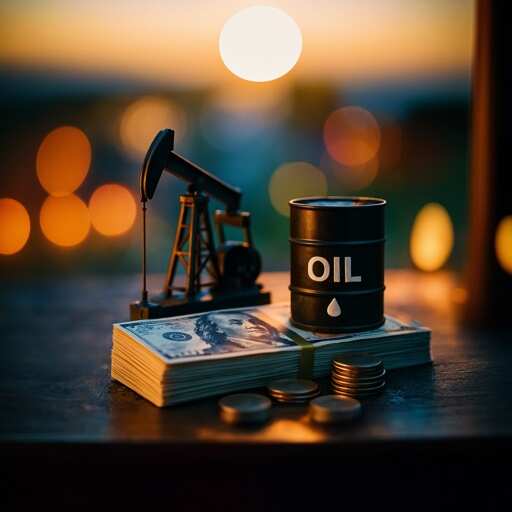
Alongside the demand to expel adversary agents, Trump expects Venezuela to deliver between 30 and 50 million barrels of oil into arrangements effectively controlled by Washington. Sanctions architecture gives the U.S. decisive say over how those barrels are sold, with the president stating he will manage profits “for the benefit” of both countries. Supporters see this as common sense: after years of socialist mismanagement and corruption, tight U.S. oversight may be the only way to prevent renewed plunder of Venezuela’s main asset.
Critics abroad frame this as a coercive protectorate-style policy, but for many American conservatives, it looks more like long-overdue enforcement of a 21st-century Monroe Doctrine. Instead of letting hostile regimes leverage Latin American oil against U.S. interests, Washington is securing supply while cutting off revenue streams to adversaries. The approach also sends a signal to Iran: if conflict in the Gulf escalates, the U.S. intends to have energy alternatives that are not vulnerable to Tehran’s blackmail or attacks.
There are costs and risks that patriotic readers should watch closely. Think-tank analysts warn that using an “extraordinary military operation” label echoes Russia’s language about Ukraine, complicating U.S. arguments against similar adventures by other powers. Venezuela’s population could also bristle at the perception of outside control over oil revenues, even if those funds stabilize the economy in the short term. The balance between defending American security and fueling nationalist backlash abroad will be delicate.
What This Means For Cuba, The Region, And U.S. Security
The fallout extends far beyond Caracas. Cuba, already fragile, now faces the likely end of cheap Venezuelan oil that has cushioned its failing socialist economy for years. Trump has openly suggested that Havana “looks like it is ready to fall” without that lifeline, and some experts agree that losing subsidies could trigger fuel shortages, inflation, and deeper unrest. For generations of Americans who watched Cuba export revolution, that potential collapse looks like long-awaited accountability.
Russia, China, and Iran, meanwhile, absorb a visible setback in the Western Hemisphere. Their intelligence and security footprints in Venezuela are suddenly at risk, and they have few good options to reassert themselves without escalating dangerously against the U.S. Closer to home, other Latin American governments are watching to see whether aligning with distant rivals now carries higher costs. For conservative readers tired of Washington’s old habit of tolerating hostile actors in the region, this shift may feel overdue, even as it raises serious long-term questions about intervention, sovereignty, and international norms.
Sources:
U.S. urges Venezuela: Dismiss agents from China, Russia, Iran, Cuba
Trump’s Venezuela move and its impact on adversaries China, Russia, Iran, Cuba
The global implications of the U.S. military operation in Venezuela
Let Freedom Ring in the Caribbean, 2026
Venezuela, U.S. strategy, and the Iran energy hedge