
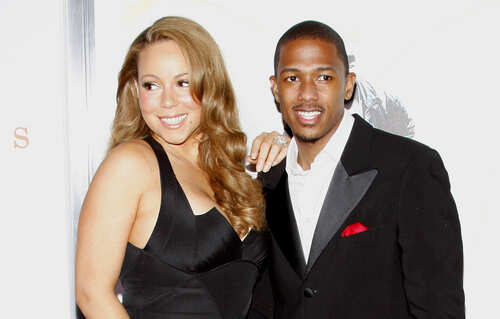
A viral claim says the media “melted down” after Nick Cannon labeled Democrats the “party of the KKK”—but the evidence trail collapses the moment you ask for a verifiable clip, date, or credible report.
Quick Take
- No credible outlet, timestamped video, or reliable report confirms Nick Cannon made the “Democrats are the KKK party” remark in a recent incident.
- The only surfaced “proof” is a recycled social-media headline-style claim that doesn’t link to an authentic primary source.
- The broader historical argument about party history is complicated by the mid-20th-century political realignment—making simplistic labels misleading.
- This episode shows how attention-economy content can distract conservatives from higher-stakes issues like war policy, inflation, and constitutional limits.
What Can Actually Be Verified About the Nick Cannon Claim
Search results and cross-checking through March 2026 do not verify any recent event where Nick Cannon called Democrats the “party of the KKK,” followed by a documented “media meltdown.” No credible news organization appears to have published the alleged story, and no timestamped video clip with clear context has surfaced through mainstream indexing. The only trace resembles a snippet-like reference that does not resolve into a substantive report or direct evidence.
That absence matters because viral political claims often rely on a familiar pattern: a punchy headline, a vague “VIDEO” promise, and a social post that circulates faster than anyone checks the underlying material. Without an original clip, date, platform, or unedited transcript, readers are left with hearsay dressed up as certainty. In a media environment already saturated with propaganda—left and right—verification is the difference between truth and rage-bait.
Why “Party of the KKK” Is a Political Shortcut, Not a Clean Fact Pattern
Historically, the Ku Klux Klan formed in 1865 during Reconstruction, and Democrats dominated much of the post-Civil War South. Some Democrats supported Jim Crow-era policies, and the Klan’s influence surged in different eras and regions. But that history does not map neatly onto today’s party identities. The research provided notes the major political realignment by the mid-20th century, complicating simplistic modern labels.
That realignment is central to honest analysis. As civil-rights legislation advanced—through actions associated with Democratic administrations—many Southern Democrats eventually shifted toward the modern Republican coalition. People can debate what motivated those shifts, but the timeline itself undercuts the claim that a single slogan fully describes today’s party structures. In other words, history is real, but political branding is often a weapon, not a lesson.
What the Research Indicates: This Is Likely a Non-Event Amplified Online
The provided research concludes the specific “Nick Cannon” episode appears unsubstantiated: no matching headlines from credible outlets, no documented reactions from major media networks, and no trackable timeline. The research also notes that Nick Cannon has drawn media backlash in the past for other controversies, which is precisely why a major new political flare-up would likely leave a clearer public record if it actually occurred as described.
Conservatives have valid reasons to distrust corporate media after years of double standards on culture, immigration, and “woke” enforcement. But distrust can’t become a blank check for unverified stories that flatter our side. When a claim can’t be corroborated, the responsible move is to say so—especially when online narratives are increasingly engineered to farm clicks, inflame divisions, and keep voters emotionally reactive instead of strategically focused.
Why This Matters to 2026 Conservatives Watching War, Spending, and Federal Power
In 2026, many Trump voters are trying to reconcile competing realities: frustration with left-wing cultural pressure and globalist bureaucracy, alongside anger at the return of overseas conflict and the feeling that “no new wars” promises did not hold. Viral culture-war stories can feel satisfying, but they also soak up oxygen that might otherwise go to questions of congressional authority, executive war powers, energy prices, and the long-term costs paid by American families.
When politics turns into a steady diet of unverified “gotchas,” it becomes easier for Washington to keep expanding—more surveillance, more emergency justifications, more spending, and more discretion for agencies that rarely shrink once they grow. Skepticism should cut both ways: toward legacy media spin and toward click-driven content that claims total certainty without showing receipts. In a constitutional republic, facts are not optional, even when the narrative is tempting.
Media Melts Down After Entertainer Nick Cannon (Correctly) Calls Democrats the Party of the KKK (VIDEO) | The Gateway Pundit | by Mike LaChance https://t.co/9zOmyI5FyR
— Marcus Wright (@riden2low) March 29, 2026
The bottom line from the available research is straightforward: the alleged Nick Cannon incident is not supported by verifiable sourcing. If a clear, original clip emerges—with context, date, and platform—it can be evaluated on its merits. Until then, conservatives are better served treating it as unconfirmed, keeping attention on provable abuses of power, and demanding competence and restraint from leaders who claim to represent America First priorities.
Sources:
https://www.hindustantimes.com/world-news/us-news/us-election