
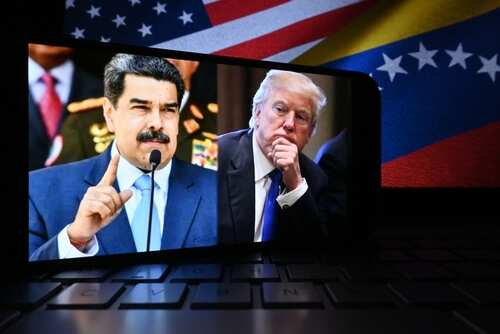
A new military intervention by the U.S. government, under the leadership of President Trump, claims to have successfully captured Venezuelan President Nicolás Maduro, raising questions about sovereignty and international law.
Story Snapshot
- The U.S. military reportedly captured Nicolás Maduro in a daring operation on January 3, 2026.
- Delta Force, an elite U.S. unit, is credited with the operation, drawing parallels to past interventions.
- The operation aims to combat narcoterrorism and is framed as a triumph over socialism.
- Critics argue the lack of primary source confirmation and potential overreach of power.
U.S. Military Operation in Venezuela
On January 3, 2026, U.S. forces conducted a strategic operation in Venezuela, targeting President Nicolás Maduro. The intervention, described as an anti-narcoterrorism effort, was reportedly carried out by the elite Delta Force. This operation is reminiscent of past U.S. military actions, such as the capture of Saddam Hussein in 2003, highlighting the unit’s continued role in significant international operations.
The mission followed covert CIA operations initiated in late December 2025, as the U.S. sought to address narcotrafficking allegations against Maduro. The U.S. military’s involvement came after President Trump designated Venezuelan gangs as Foreign Terrorist Organizations. This designation provided a legal framework for the military action, aiming to dismantle alleged criminal networks linked to Maduro.
Political Repercussions and International Response
President Trump’s administration has portrayed the operation as a decisive move against socialism and terrorism. Trump’s statements emphasized a commitment to “run the country” until a safe transition could occur, a move that some international observers view as an overreach of power. Critics question the legality of unilateral military intervention without broader international consensus, arguing it could set a troubling precedent.
The capture of Maduro has led to a power vacuum in Venezuela, with the U.S. indicating plans for troop deployment and potential control over Venezuelan oil resources. This has sparked concerns among Venezuelan civilians and the international community about the implications for sovereignty and stability in the region.
Economic and Social Implications
The operation’s impact extends beyond political dynamics, influencing economic and social conditions in Venezuela. The U.S. blockade and military actions have disrupted oil exports, exacerbating Venezuela’s economic challenges. While U.S. energy firms may benefit from accessing Venezuelan oil, the local economy faces further decline, potentially leading to a humanitarian crisis.
The operation’s success in capturing Maduro offers a potential opportunity for the Venezuelan opposition to facilitate a democratic shift. However, the enduring effects on regional geopolitics and U.S.-Venezuela relations remain uncertain, with critics warning of accusations of imperialism and the risk of insurgency.
Sources:
2026 United States strikes in Venezuela